
The Power of Possible: Leadership Edition
Unscripted Leadership
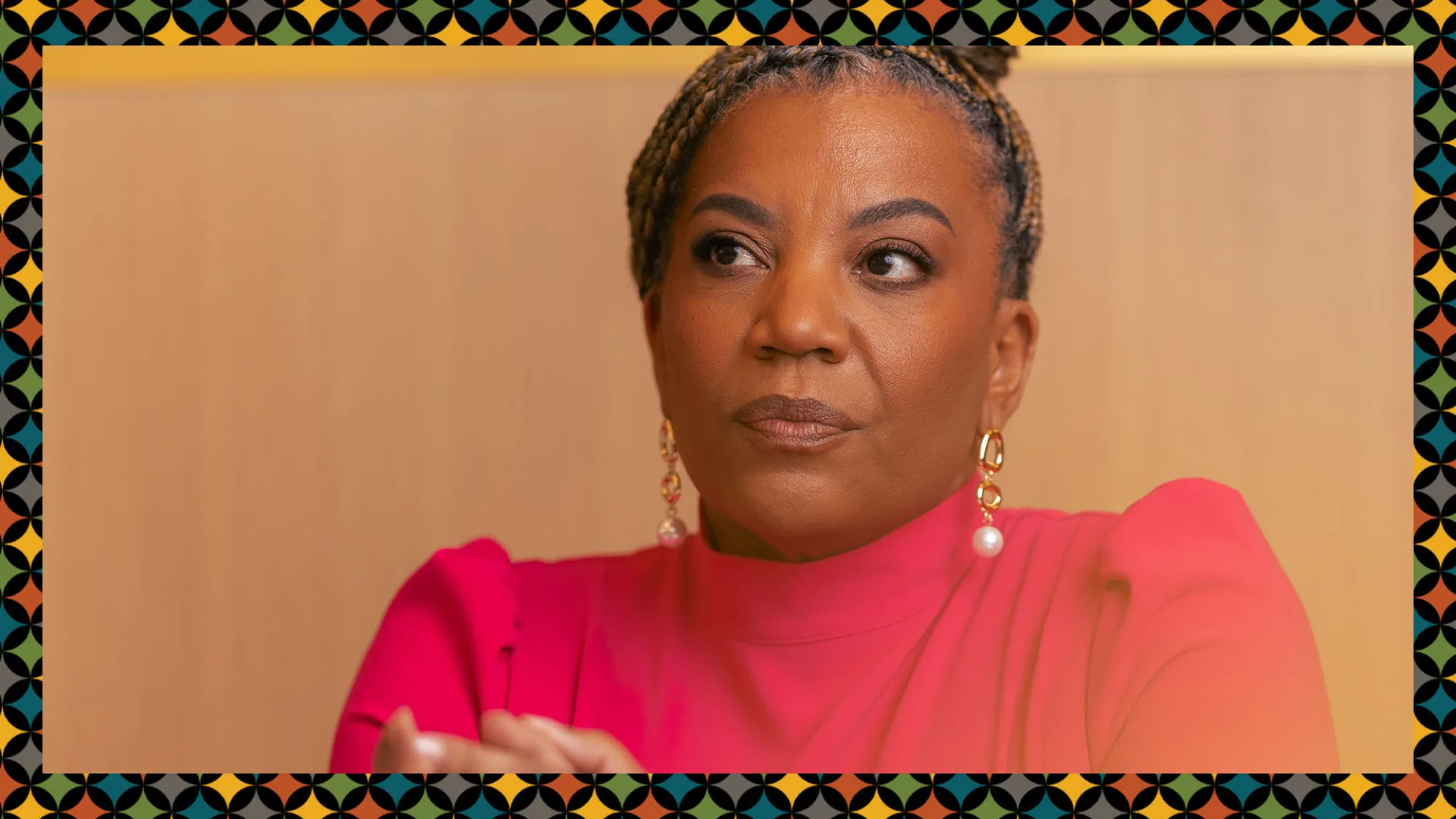
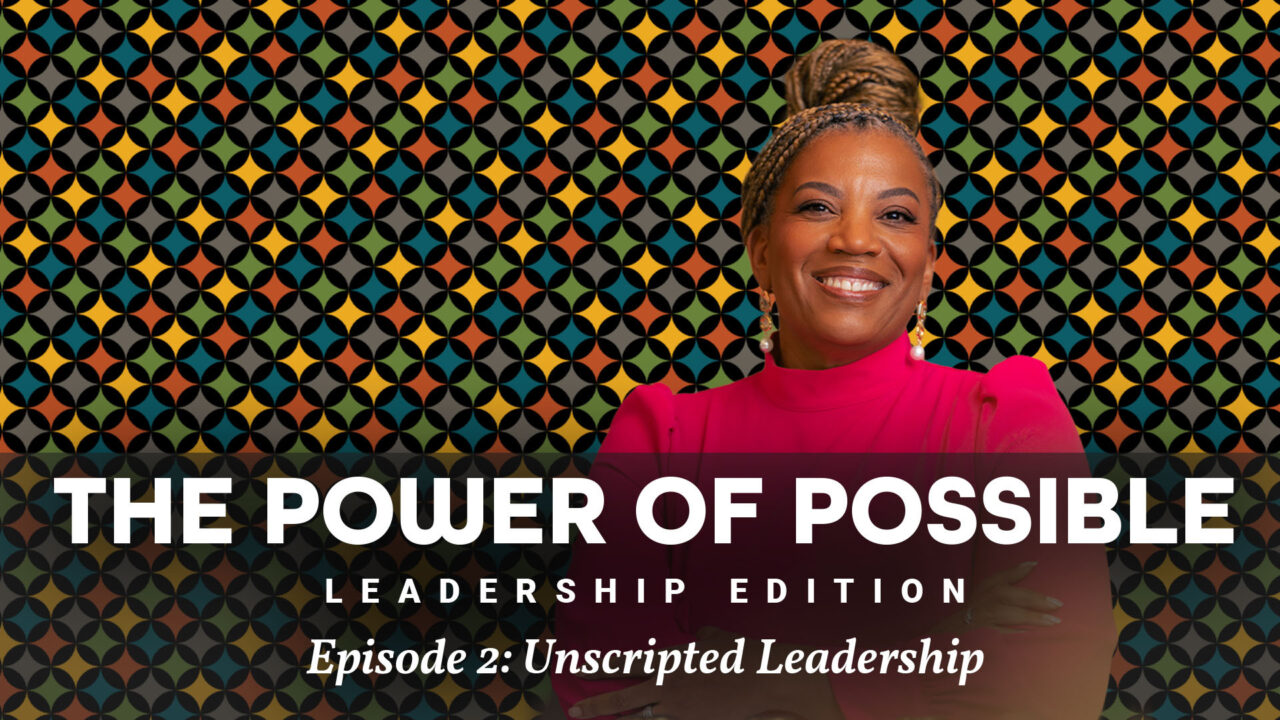
Unscripted Leadership: Where does one’s leadership journey begin? | Roots, place & lived experience
In this Unscripted Leadership episode of The Power of Possible: Leadership Edition, Dr. Tashion Macon invites listeners to take a deeper look at where Chanda Smith Baker’s leadership was first shaped. Their conversation traces back to her childhood. Growing up among neighbors with diverse lived experiences and in a family that welcomed disagreement taught Chanda to listen, question assumptions and stay connected to others.
Chanda opens up about stepping into her first CEO role during a season marked by personal loss and community crisis, and how those experiences pushed her into a more honest, vulnerable way of leading. This is a grounded, unfiltered conversation about what it looks like to lead in community, to carry complexity and to keep showing up with intention, even when the path isn’t clear.
Watch Now
Listen Now
Find The Power of Possible: Leadership Edition wherever you get your podcasts, including Spotify, Apple Podcasts, Amazon Music, and more.
Show Notes
In this Unscripted Leadership episode of the Power of Possible, Dr. Tashion Macon invites listeners to take a deeper look at where Chanda Smith Baker’s leadership was first shaped. Their conversation traces back to her childhood. Growing up among neighbors with diverse lived experiences and in a family that welcomed disagreement taught Chanda to listen, question assumptions and stay connected to others.
Chanda opens up about stepping into her first CEO role during a season marked by personal loss and community crisis, and how those experiences pushed her into a more honest, vulnerable way of leading. This is a grounded, unfiltered conversation about what it looks like to lead in community, to carry complexity and to keep showing up with intention, even when the path isn’t clear.
Quotes
What leadership did not look like, was agreement. What leadership looked for me was a community of people that helped you advance your ideas by challenging them, not by just immediately agreeing, so that you could sharpen your strategy. So I grew up with that.
“At the crux of the issue is making sure people have an opportunity to grow old and thrive. That is it. If you didn’t know, you know now.”
References
“Leadership on the Line, With a New Preface: Staying Alive Through the Dangers of Change" by Ronald A. Heifetz and Marty Linsky
Tashion Macon (00:00):
Hello, everyone. I'm Dr. Tashion Macon.
Chanda Smith Baker (00:03):
And I'm Chanda Smith Baker, the President and CEO of the Saint Paul & Minnesota Foundation.
Tashion Macon (00:08):
Together we're opening up leadership conversations we've been having for a long time with each other and others because we've witnessed how powerful it is to explore these ideas out loud. And this is The Power of Possible Leadership Edition.
(00:28):
When you coach someone, you learn where they come from before you understand where they're going. And with Chanda Smith Baker, President and CEO of the Saint Paul & Minnesota Foundation, where she comes from is everything. I'm Dr. Tashion Macon, leadership coach. And today, your guide into a conversation I've had the privilege of being close to for a long time. In this episode of The Power of Possible, Chanda takes us back to the beginning, North Minneapolis, a childhood she calls growing up in 3D. A grandmother's table where disagreement wasn't a problem, It was the practice. This is where her leadership was born. And once you hear it, you'll understand everything that comes after. All right. The table is set. Pull up a seat.
(01:27):
I think this is going to be such a wonderful conversation. And I'm excited for all the people that are going to learn about your leadership approach, learn what grounds it. And so one of my first questions today is your leadership journey has been grounded in and rooted in community. When you think about your earliest sense of leadership, what moment or challenges rise to the surface?
Chanda Smith Baker (01:53):
I appreciate that question because I was raised in community with family that have been deeply connected with neighbors, with issues, with opportunity, and so I grew up around that. So I don't know if there's a specific moment in which I identified what my leadership looked like at a early age, but I did identify with what leadership was through the examples around me. And what it was for me extended beyond what I needed and what was familiar. I've described my upbringing as growing up in 3D. A lot of people grow up in one-dimensional situations where everyone sort of looks like you and has the same experience. Well, that was not my upbringing. I grew up across the street with Surin and Paul, who eventually opened up a Thai restaurant called the King and I. And Paul had polio as a child and he was wheelchair-bound. So I got to understand what life was for him navigating. I got to understand how Surin navigated as a non-English speaker to being an entrepreneur, to a family had moved from the reservation, to the neighborhood, to another family who had adopted kids.
(03:12):
And so these were all things that challenged my own thinking and understanding that everyone's life doesn't look the same, and yet, you can be in community together. So that was grounding from the beginning. The other thing is growing up in a neighborhood that has opportunities for others to see the beauty, the genius that exists within it means that people are defining it from outside regularly, and the people that live there. And so I grew up with an outside narrative that didn't match my experience. And so I think that has grounded my leadership to a point of saying, "What else do I need to understand?" Because there's so many broad definitions that get swiped onto people or a community, that are ... maybe there's some pieces that are accurate, but it doesn't allow for the dimensions of what exists or the dimensions of who someone is to come forward without someone willing to see it.
Tashion Macon (04:10):
I love how you are extrapolating the distinction of dimensions, and decisions, and dimensions, and demographics, and what that sometimes can mean. What's interesting to me is I often hear you say, "In community." And most times when community is spoken about, it's in the community. Do you see a distinction there?
Chanda Smith Baker (04:36):
I mean, I think foundationally I don't see myself outside of community. I am community. I am the, the, in community. I think that that presents opportunities and sometimes challenges depending on your proximity to whatever issue that you're dealing with. But I am not a over community or without community leader. And so things happen in community. They happen in relationship. They happen in a space, in community. I don't even know if I pulled out that nuance, but I could see it.
Tashion Macon (05:11):
So from that context, what would you say about your own roots that taught you about leading in addition to ... I think I've heard you speak about the different dimensions of leadership and your neighbors, the different distinctions around it. Do you think that roots you in how you lead in your definition of leadership?
Chanda Smith Baker (05:35):
Yeah, it has to. I mean, I think the question is, can I articulate all the lessons I learned from family and community that's been around me? Probably never in full articulation, but in my body, it lives. The legacy lives through my actions and through the memory of what I've heard. An example that sits out for me is my uncle, Dr. Richard Green, who was the first Black superintendent of the Minneapolis schools, first Black chancellor of the New York schools. The title was not what stands out, but what stood out to me is that he often had other leaders in community around my grandma's dining room table. And I remember when I was younger and I'm like, "Are these people fighting? Are they fighting?" 'Cause they would be fiercely debating. Like, "No, Richard, you need to think about this," or, "No, you got to do this."
(06:26):
And it would be dynamic and loud, and they'd have their pipes or whatever they had, and their whiskey. And they would be debating, almost arguing, like disagreeing. And then they would leave and they're like, "Well, you got everything you need?" "Yep". "Okay. I love you. I'll catch you on the other side of this decision." And so what leadership did not look like was agreement. What leadership looked like for me was a community of people that helped you advance your ideas by challenging them, not by just immediately agreeing with so that you could sharpen your strategy. So I grew up with that. My uncle led in ways that I saw, and he came into those roles when I was in elementary school or middle school. So leadership was accessible as he was moving into big roles. He was doing some of that role while I was able to witness it. And how often do you get to witness leadership like that behind the scenes? And so it was a gift.
Tashion Macon (07:33):
Take us forward into your contemporary leadership style and contemporary conditions that may have shaped your leadership journey. What might they be?
Chanda Smith Baker (07:45):
We've had the opportunity to be in conversation before on the podcast, and I think I was sharing with you then lessons that you bring forward.
Tashion Macon (07:59):
Yes.
Chanda Smith Baker (08:00):
And there was a few lessons like you go to work to work and you go to school to learn.
Tashion Macon (08:06):
Yes.
Chanda Smith Baker (08:07):
You're not there to be talking and doing all these extra things. You're coming there heads down, so don't trust the environment. And I embodied that for a good part of my leadership. In 2011, I became the president and CEO of Pillsbury United Communities. And my very first week, my cousin was murdered. And I am at a professional high and a personal low. And he wasn't a distant cousin, he lived in my house on and off, he watched my kids. I would get a Mother's Day card from him. I was a big sister mother to him. And we shared Uncle Richard who was known. He had passed on but he was known.
(09:04):
So as a result of it, I end up in the paper being named as his relative of my cousin who was just murdered, just graduated from the police academy, very excited about his future, a father of two girls. And now my entire team and community know that I'm dealing with this as I step into leadership. So here I have been exceptionally private, and now one of the hardest moments of my life is public at the same time I'm entering into leadership. It's disrupting me in all kinds of ways, right?
Tashion Macon (09:43):
Mm-hmm.
Chanda Smith Baker (09:43):
I'm wide open. I'm broke open. I'm sad. I'm trying to figure out how do I navigate all of this. And I remember going into my first staff meeting. I didn't even have a staff meeting. My first staff meeting, I remember exactly where it was. I remember where people were standing. And saying, "All I can say to you is my work is about preventing this."
Tashion Macon (10:11):
Wow.
Chanda Smith Baker (10:12):
"It is about preventing the person who murdered him and it's about preventing someone from being harmed. At the crux of the issue is making sure people are safe and have an opportunity to grow old and thrive. That is it. If you didn't know, now you know. That is it. My whole heart and soul is going to be into doing work that prevents this from happening." And so I am just navigating in all kinds of crazy emotional ways. And his funeral was on May 20th. And a tornado hit the neighborhood on May 22nd.
Tashion Macon (10:54):
Wow.
Chanda Smith Baker (10:55):
So ...
Tashion Macon (10:57):
So you're literally navigating death and destruction.
Chanda Smith Baker (11:00):
Death and destruction. And my house was impacted, family members' houses were impacted, my neighbors were impacted, my organization was impacted, four of our buildings were hit. My predecessor's files, 35 years of files were destroyed. I'm in a temporary office. I'm staying in a hotel. And then I was asked to lead the recovery. And I don't even know how to get out of bed every day, but I did. It's actually when I first came in contact with the book, Leadership on the Line, it was a gift as I was navigating ... just like we've seen publicly, when you navigate a crisis, people want to make sure people are okay, so the public pressure was there. "How many parcels? How many people were hit? How many people need to get housed? Why don't you have the numbers?" I was on full display at a time that I needed to probably be fully at home. And it is what it was.
Tashion Macon (12:02):
What's interesting to me is I do fundamentally believe books will come for you. They will find you when you need them most. And I do think, as I'm hearing the book, Leadership on the Line, and whoever gave the book to you, God bless them, because it likely helped you find home within yourself and find your own inner address for leadership while you were navigating a professional high and a personal low. And I think the theme that keeps resonating ... I think maybe it's just a life theme, not even a leadership, that two things can be true at the same time. And we're constantly holding these tensions. And how we navigate those are critically important to how we are able to show up for ourselves as our best selves and so that we give ourself to ourself and we're able to give ourself to others.
Chanda Smith Baker (13:00):
Right. Paula Haywood is who gave me the book. I had just met her.
Tashion Macon (13:06):
Wow.
Chanda Smith Baker (13:07):
And she saw.
Tashion Macon (13:10):
Being seen.
Chanda Smith Baker (13:11):
She not only saw, but she acted.
Tashion Macon (13:14):
I like it.
Chanda Smith Baker (13:15):
It's a act of leadership to recognize them, to observe what someone else might need. She did not come and lecture. She said, "Here's a book that I think might be useful as you put things in perspective." And I think a couple of things happened in that season that I didn't know I was holding that level of complexity. I was holding grief and I was holding expectation. And I was holding, "I didn't want to disappoint." I was holding other things, but the rear view will teach you things. And what I recognized is, one, the talk that I had with the team led me to a place of vulnerability that I would have never gotten to on my own and it allowed me to understand that I was safe, that nothing happened ... even if everyone wasn't responsible with the news, nothing happened. Nothing happened for sure that was the degree of consequence that had happened to him. I did not die. I just felt uncomfortable.
Tashion Macon (14:21):
Right.
Chanda Smith Baker (14:21):
There's so much that we hold. My leadership has come into relationship with a number of things that have felt hard. My first week in this role was the Annunciation School shooting. I'm a parent. I know kids in school. The team has people in school, kids in school. This is a scary moment in which our very notion of safety has been interrupted. And so you can't just lead to just get a specific result. You have to be able to lead through an emotional terrain that we haven't all been in. And so how can I do that if I'm unwilling to be in relationship with my own vulnerability or my own experience?
Tashion Macon (15:13):
Listen, that is so valuable from a standpoint of leadership and a takeaway to those who are watching or listening, to be in relationship with your own experience and to be courageous enough to be in relationship with your own experience, authentic enough to do it. And the avenues that ripple forward when you do so.
Let’s Stay Connected
Sign up for the Saint Paul & Minnesota Foundation newsletter to get involved with your community, read stories of nonprofits doing great work, and get tips and tricks on maximizing your impact on your favorite causes.