
The Power of Possible: Leadership Edition
The Ripple Effect
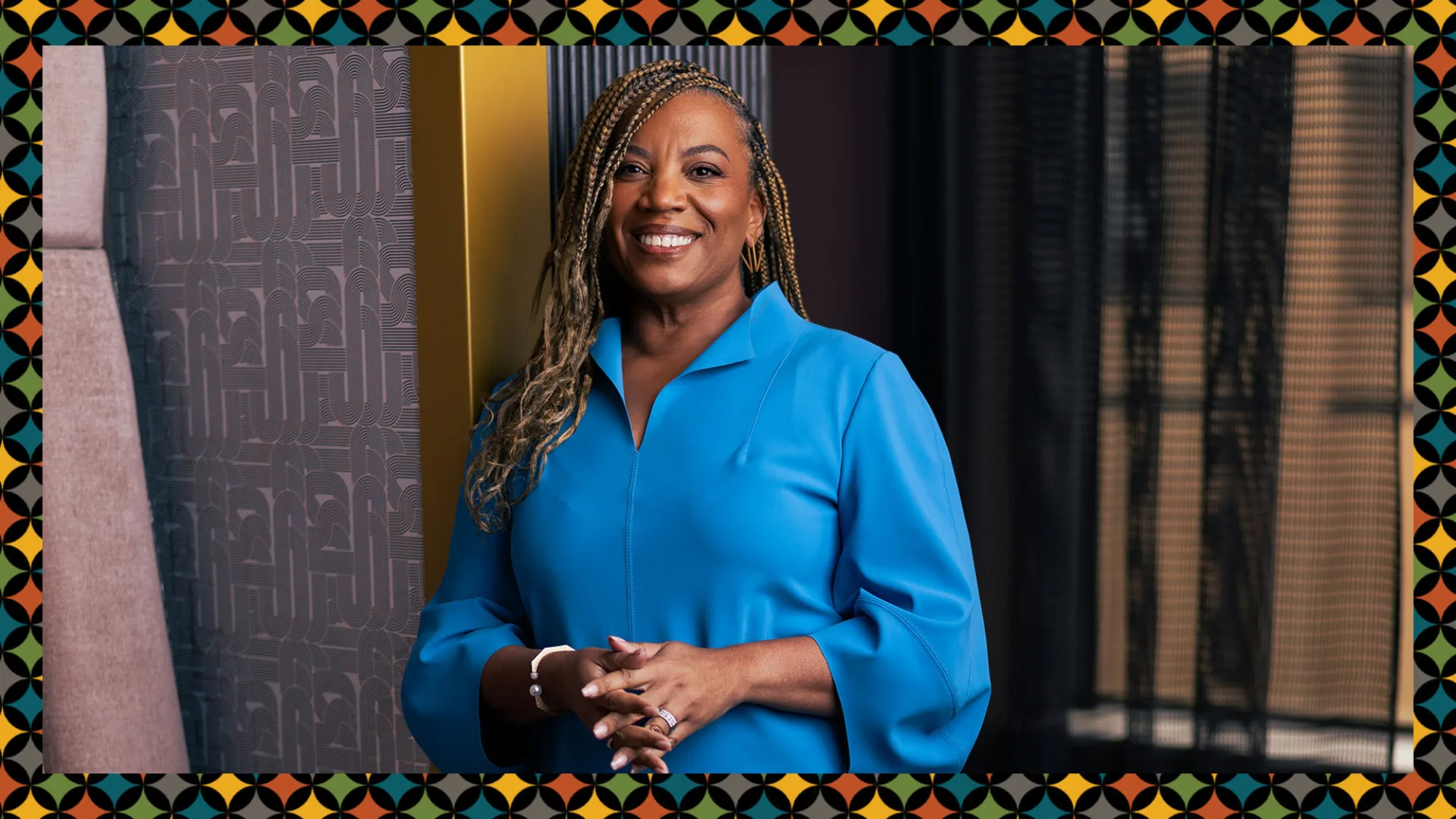
The Ripple Effect: How do leadership decisions drive change? | Generational impact & the long view of giving
In this episode of The Power of Possible: Leadership Edition, Dr. Tashion Macon and Chanda Smith Baker reflect on what it takes to lead with steadiness when everything around you feels uncertain. Grounded in moments when Minnesota was thrust into the national spotlight, Chanda shares how she resisted the pull of urgency and instead leads with a long view, recognizing that while situations can feel out of control, leaders don’t have to be. It’s a perspective rooted in experience, discipline and a deep belief that meaningful change requires patience, clarity and a commitment to community over headlines.
A key thread throughout the episode is the role of generosity in driving lasting change. Chanda challenges the idea that impact is always immediate or easily measured, instead pointing to the long arc of giving — where investments made today may not reveal their full value for years or even generations. Through personal stories, she illustrates how acts of generosity, whether in moments of crisis or through sustained commitments, create ripple effects that shape lives and communities in ways we may never fully see.
Watch Now
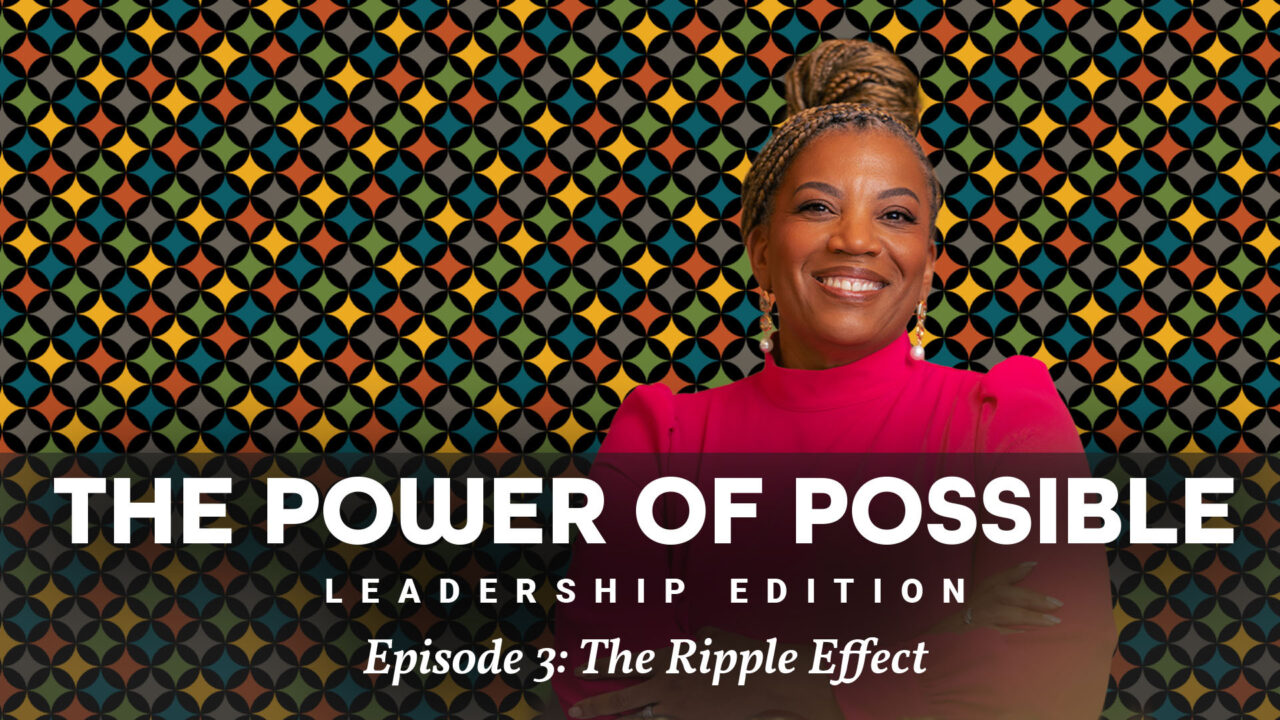
Listen Now
Find The Power of Possible: Leadership Edition wherever you get your podcasts, including Spotify, Apple Podcasts, Amazon Music, and more.
Show Notes
In this episode of the Power of Possible, Dr. Tashion Macon and Chanda Smith Baker reflect on what it takes to lead with steadiness when everything around you feels uncertain. Grounded in moments when Minnesota was thrust into the national spotlight, Chanda shares how she resisted the pull of urgency and instead leads with a long view, recognizing that while situations can feel out of control, leaders don’t have to be. It’s a perspective rooted in experience, discipline and a deep belief that meaningful change requires patience, clarity and a commitment to community over headlines.
A key thread throughout the episode is the role of generosity in driving lasting change. Chanda challenges the idea that impact is always immediate or easily measured, instead pointing to the long arc of giving — where investments made today may not reveal their full value for years or even generations. Through personal stories, she illustrates how acts of generosity, whether in moments of crisis or through sustained commitments, create ripple effects that shape lives and communities in ways we may never fully see.
Quotes
“Somebody invested in Minneapolis Public Schools, and I sat in those seats. Now I sit in a different seat, because of their generosity.”
“Emotional and reactive is not a long-term solution. It is not sustainable. It doesn’t allow for you to access your best strategy, your best emotion, your best energy. I don’t think being strategic and steady means that our avoiding responding to the needs of today.”
References:
“Level Up” by Ciara
"100% That Boss" by Alexis Nicole Jackson
Tashion Macon (00:00):
Hello everyone. I'm Dr. Tashion Macon.
Chanda Smith Baker (00:03):
And I'm Chanda Smith Baker, the president and CEO of the Saint Paul & Minnesota Foundation.
Tashion Macon (00:08):
Together, we're opening up leadership conversations we've been having for a long time with each other and others, because we've witnessed how powerful it is to explore these ideas out loud. And this is the Power of Possible Leadership Edition.
(00:28):
When Minnesota became the center of national attention, more than once I watched how Chanda moved, not reactively, not for optics, steadily with the long view in mind. Most leaders struggle to hold under that kind of pressure. I'm Dr. Tashion Macon, and in this episode we talk about what it takes to play the long game with patience and persistence, resisting the pool of urgency for urgency's sake. Chanda Smith Baker, president and CEO of the Saint Paul & Minnesota Foundation reflects on what those national moments revealed, not just about Minnesota, but about what generational change actually requires of a leader. Some of the most powerful things she said in this episode and conversation were the quietest. Stay with it, stick with it, listen deeply.
(01:32):
We have seen Minnesota come to the center of the national conversation, and it has shown us that leadership is a state of mind and a willingness to act. We have seen community leaders, next generation leaders bonding together, choosing, making a choice to be in commitment around some of these issues that could be pervasive and dividing in the state. Can you reflect on what you think is going right or going well in Minnesota, and how that has landed with you in these current times?
Chanda Smith Baker (02:12):
Well, I mean, I feel proud. I feel proud. I feel disappointed and I feel proud. I can hold complex feelings and I feel like I'm holding a lot of tension between things. So, I know that not everyone in the state feels the same way, but what I can recognize is that for those that got activated, for a lack of better word, we had a common problem. We had a common enemy. We had a common understanding that we wanted to protect our neighbors, whatever and however you want to reduce it, we had something that we could rally around. And it became really obvious. People's human rights should be protected. People should not be pulled from their homes. People should be allowed due process, all the things that we believed about our country and our Constitution. And people were against those things not being true.
(03:15):
Now, it's easier when you have a common thing that you all understand. So, I'm proud, and I recognize it is very different than let's say when George Floyd was murdered. Where now we're debating, what did he do, what didn't do, what did the police do, what didn't they do? We are bringing in our own information into that that makes us stand on different sides in a more obvious way. Some of the same people in the same part of the city. And so it played out differently, and yet in both cases we saw disruption, we saw new leadership emerge. We saw people that were willing to step outside of their comfort zones. We had an issue that was targeted on immigrants that landed with two white residents, two white neighbors losing their lives. And yet, people were still willing to get out, stand in the middle of the sidewalk, blow a whistle, give a ride, do whatever.
(04:18):
That wasn't a lack of courage. That wasn't even a lack of understanding of what an outcome can be, because the outcome played out on video all over the internet. That was an over and beyond moment where it's not just about me, or our survival is actually related. Our democracy depends on you being able to be engaged, and I'm willing to fight for that.
Tashion Macon (04:41):
Thank you so much for that. I think that's a profound approach, particularly because as we grapple with these times as a leader of a dynamic philanthropic organization, donors are discouraged. They're discouraged by wondering if my giving, if my commitment is gaining ground or losing ground. What would you say to donors from that perspective around the state of the world, their state of mind, the state of the state, and how to encourage them a bit to stay on the front line for the future, not necessarily the fight? The fight is what we get through for the future we want to imagine.
Chanda Smith Baker (05:25):
Yeah. I mean, I wish the future happened in a year. I mean, I think that's a very different orientation. You lose patience with things you can't see. But someone invested in Minneapolis public schools, and I sat in those seats, and now I sit in a different seat as a result of their generosity. My uncle, I'll go back to his story where my grandmother was a widowed single mom raising kids. He gets in a little bit of trouble. He ends up in a county homeschool. He ends up going to Phillis Wheatley, philanthropy, generosity, donors. He got into a boxing program with Harry Davis, first Black man to run for mayor in the city of Minneapolis, my mother's cousin.
Tashion Macon (06:12):
Wow.
Chanda Smith Baker (06:12):
They come into relationship with each other. He finds community, he finds opportunity, he finds someone that believes in him, and years later he's coming out of Harvard with a PhD and becomes the first Black superintendent. Now, some donors somewhere probably saw him in the county homeschool and felt like maybe that money didn't go for anything, but it did. The return just wasn't on the same timeline.
Tashion Macon (06:37):
The timeline. I love how you demonstrated this arc of generational impact. That is the power of narrative change, right? And it also for me personifies how you speak about two things can be true at the same time. Holding the tensions of what may appear problematic and even within that seed is the potential of something more powerful. When you think about that, how do you stay patient? When change seems like it's taking too long or what we're working towards, is it hitting as quickly as we desire?
Chanda Smith Baker (07:25):
I mean, patience usually is not my problem. I mean, it is in some settings, but I think that as you were talking, I was thinking about we have our issues and we fund them. We want people to eat. We want people to have adequate housing and schooling, but ultimately the impact is on people. And the investment allows people to have access, but the investment also allows for people to unfold into hopefully their best selves, unfold into believing that their own dreams are possible. And just like every person living, at some point someone believed in something. And it might have taken you a while to get there, but because that belief was there, that's how I see philanthropy. That's how I see relationships. That's how I see community is philanthropy and the generosity of this place can both solve immediate needs while sometimes not recognizing the long-term investment of that contribution, that generosity. The dividends are more than what I think we are often able to articulate.
Tashion Macon (08:40):
I think what's really profound about that, like your last statement, "The dividends are likely sometimes more profound than we can articulate." When we think about that and we think about the daily work, the daily work of the work and the daily decisions, I'm struck by how, and I've heard this from your team, that your message is ... To your team is to be steady, stay steady, even in crisis. Where does that come from? I think you're infusing that into the culture of your organization. Where does that come from?
Chanda Smith Baker (09:25):
Look, I don't know. Steady and stable. It comes from a knowing that we have what we need. I don't feel out of control, things are out of control.
Tashion Macon (09:42):
That's a distinction. That's powerful, yeah.
Chanda Smith Baker (09:45):
Right? We're not out of control, things are out of control. So, what can we influence? What can we do? Emotional and reactive is not a long-term solution. It is not sustainable. It doesn't allow for you to access your best strategy, your best emotion, your best energy. It creates a whirlwind. It depletes you emotionally. That is just not my energy. That is not my energy at all. We at the foundation are already in solidarity of community. We have a diverse team that's already in relationship. We have a team that lives in community. We have a team that has been through hard things. What have we learned? What do we need to understand? Where do we need to depend on each other? Where should we be leading? Where should we be stepping back? What do we need to unlearn? This is not just simply an external exercise of having everyone else be different. That's just a part of it.
Tashion Macon (10:55):
And that's a full stop. And I love how when we've talked and worked together previously, some things that we know are true, like you move in a rhythm over rush. Urgency doesn't pull you forward. Headlines aren't the thing that moves your heart. And I think it's something I see your team actually reacting to and responding to, like staying in the heart of the work. The headlines will be the headlines. Sometimes they will change 10, 15, 20 times a day, sometimes one time a day. But to your point, your team is already in community and to continue to facilitate that rhythm over rush. Do you think it is possible to escape the urgency of all of this calamity around us right now?
Chanda Smith Baker (11:55):
I don't think that being strategic and steady means that you're avoiding responding to the needs of today. But aren't we already doing that? Weren't we doing that before?
Tashion Macon (12:08):
Yeah.
Chanda Smith Baker (12:09):
There are things that show up all the time that we need to respond to. I think the difference for me is responding to a moment of need and still being emotionally grounded. I think it's something else if you're reacting to a point in your response that's coming out of fear or some other places. I don't know how to fully articulate it, but I think that's what I think about. It's not that we are not moving forward. We made really smart moves and we made a lot of moves, and we are funding community. We're doing a number of things that we needed to do, but it's important that as a foundation that is helping people that we recognize what that role is and that we don't feel helpless while we're trying to help. That does not generate the type of energy we need to go forward, it depletes it.
Tashion Macon (13:12):
I like it. So, let's not feel helpless while we're trying to help. Let's not feel hopeless while we're trying to demonstrate hope. And I think that in previous conversations with you, what's profound to me is this ability to be effective and not affected. In some kind of way you're able to master that. Do you see a form of centering? Is there any kind of practice that you bring to your leadership to help you remain strategic and steady, or is it ... A lot is rooted, I understand, in family and community, but the part of Chanda that is just Chanda.
Chanda Smith Baker (13:58):
Yeah, I read. I read. I look at theory, right? Organizational theory, organizational development, right? How do you structure to get the best out of organizations and people that work within it? Yes, there's theory behind it. There's practice behind it, right? There is balcony time, leadership on the line. How do you make sure that you're not so in the weeds that you can't see the whole story? How do you make sure that you're anchored from the right perch? And sometimes you got to get down in the work, but you got to come up sometimes to make sure that you can have perspective. And so I'm encouraging perspective. I'm encouraging that the work is sitting still. The work is seeing the picture. The work is not just being in reaction and response.
Tashion Macon (14:55):
So you read, is there also like a playlist behind it?
Chanda Smith Baker (14:59):
You know I got a playlist. I got all kinds of playlists, some of which are available for public consumption.
Tashion Macon (15:06):
Okay. So, not the ones that are not available for public consumption, but if a song was ruminating with you right now around if you just had to hit the tape, or you had to hit the, what would it be?
Chanda Smith Baker (15:22):
Oh, I have way too many songs. I don't know, Level Up.
Tashion Macon (15:26):
I like it.
Chanda Smith Baker (15:28):
Level Up. 100% That Boss.
Tashion Macon (15:31):
I love it. Thank you for sharing that. What I appreciate when we ask this question, of course, is the levity, like leadership can be heavy, right? And so, it has to be infused with some levity, so I just wanted to ...
Chanda Smith Baker (15:50):
Well, I mean, I think the point here is that, and I think what I appreciate about these conversation, getting asked questions that it has me, it presents an opportunity for me to get to my own balcony on my leadership, right? To be able to say, "What are the practices? What do I do?" I wake up the same way. I wake up, I grab my phone. I am not looking for emails, I'm about to play my music. I ground in music. I ground in music that sets my day and my intention. I read something. I usually read whatever word comes to mind the first thing, and when I wake up I find something that centers me on that word.
Tashion Macon (16:29):
We've talked about Minnesota being in the national conversation, and sometimes it hasn't always been positive of late maybe in the last six, seven years, but a lot of times the fact that Minnesota is one of the most generous states doesn't come to the center of the stage. And so, I'm wondering how a potential, or a donor or a person who believes in using their gifting, their offering, funding the future they hope to see, how do they stay committed to the ripple effect of generational generosity, like the long-term sustained impact of it?
Chanda Smith Baker (17:20):
There's layers of legacy in being generous. There is generosity that forwards your family's commitment of investment. It's personal, it's family, it is a responsibility that was expected. And I think that's a great way to be generous, to say that my family has been generous to this community and has contributed to stabilizing institutions and places so that other people can benefit from it. And I think that is a legacy within itself that births new generations of generous people, just in a family. I think that from an investing in community, and if I use this setting that we're in this time that we're in, or any time of crisis, there are different types of gifts. There is a gift that responds to a crisis, mutual aid and food. Those type of investments deal with an immediate need, but they also seed in someone and how that made a difference.
(18:38):
You can listen to leaders on almost any platform. They'll say, "I remember when this person did this, or I remember when someone gave me this or someone paid for me to go to school or somebody." And they're still talking about it years later, because they seeded a level of hopefulness, that I'm seen in my crisis and someone cared about me and therefore I'm going to play it forward in the same way that people may play it forward in their own families. So you have a response to crisis in which mutual aid resources, things are needed immediately. You have programmatic investments, right? They support individuals, they support a program, they support an organization that you have a relationship with, and then their systems change, right? Both of them have multiple ways of giving impact but different time horizons. And I think it's really important, if you want to see a needle move on a state, it didn't happen because you did mutual aid, but it doesn't mean that you didn't see the leader that might inspire it later, but that's not the investments you made.
(19:54):
And I think it's important for us to talk about and be more clear about what it is that we're trying to accomplish. And I'm grateful for the donors in our state. We have people that have funds with us that have made long-term systems commitment, let's say around housing, our own state initiative that we put out. And they understand the importance of it and they also stepped in this crisis to make sure someone can pay rent. And both of those things, all of those things are needed. And regardless of how people want to be generous, that generosity is what we've been known for. That generosity is why we have the infrastructure that we have in our state. It is why we need to stay at the table giving what we got on behalf of future generations.
(20:45):
I think that is extremely important and we value those relationships. I think what's important about the work that we do is that we can come to the table and neither one of us have an answer, but we each have a perspective. And we can bring that together to say, "Here's what we know is needed." And you can say, "Here's what I want to accomplish. Here's what I hope happens." And we can put that art together to make a difference for a family, a school, a community, an organization. I mean, that is exactly what we do.
Tashion Macon (21:22):
And I think that's really powerful and I think it was important for me to hear you speak on that, because again, because of how Minnesota lately has been in the national discourse. And I do think it's time that we lift up the narrative around the generosity of this state and its people and how they have shown up to help their neighbors, how they've shown up to push injustice further back. And so thank you for sharing that. And the different dimensions. I love how you talked about the different dimensions of givers and the arc of time. And like Martin Luther King said, "The arc of justice bends long." And if we're going to stay in this for the long game, we do have to understand the generosity will show up and ripple in different ways, so thank you for sharing that.
Chanda Smith Baker (22:15):
Yeah. What just came up was my uncle, since he's been referenced in this, and I mentioned he went to Harvard. Well, I ran into a donor a couple of years back, probably more than a couple, but some years back, well known. I was reading something of my uncle's to find out that this family actually helped supplement his tuition to go to Harvard. Now, maybe they were looking for him to get a degree, maybe they were looking to support the institution, maybe they had no idea that he was going to inspire as many educators as he did that then became administrators. Maybe they had no idea what the rippling effect of that decision was going to do on a community, right? Green Central neighborhood is named after him. There's a school named after him, right? There are people that went into teaching, the superintendent's awards are named after him.
(23:18):
I use that as an example to illustrate that I wish we could hold all of the ripple effects from generosity. We can't even hold it, because the way in which we measure it is simple, it's simplified. But I think that if we expand what impact means, that there's more opportunity for us to think about our gifts, our investments from a more expanded point of view that in fact every single investment is seeding the future. The future leader, the future opportunity, the creativity of a place. And so, there's no limit. It's an investment that's essentially priceless.
Tashion Macon (24:02):
Priceless, exponential, infinity, hold it. That's what we need to do, hold. And even elevate what impact means, so thank you for sharing that.
Let’s Stay Connected
Sign up for the Saint Paul & Minnesota Foundation newsletter to get involved with your community, read stories of nonprofits doing great work, and get tips and tricks on maximizing your impact on your favorite causes.