
The Power of Possible: Leadership Edition
The Power of Possibility
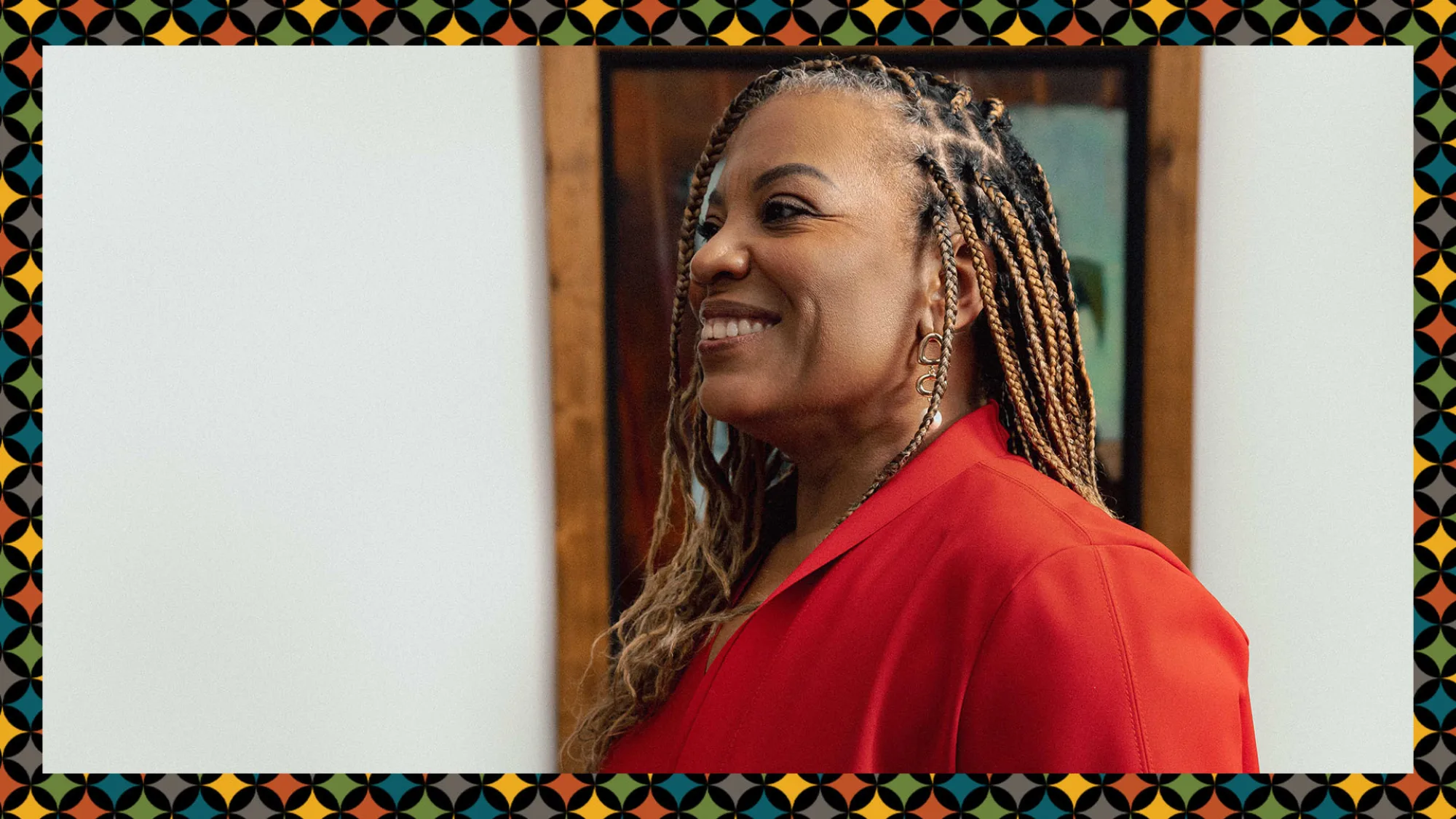
The Power of Possibility: Why is This Important in Leadership? | Leading from What’s Possible
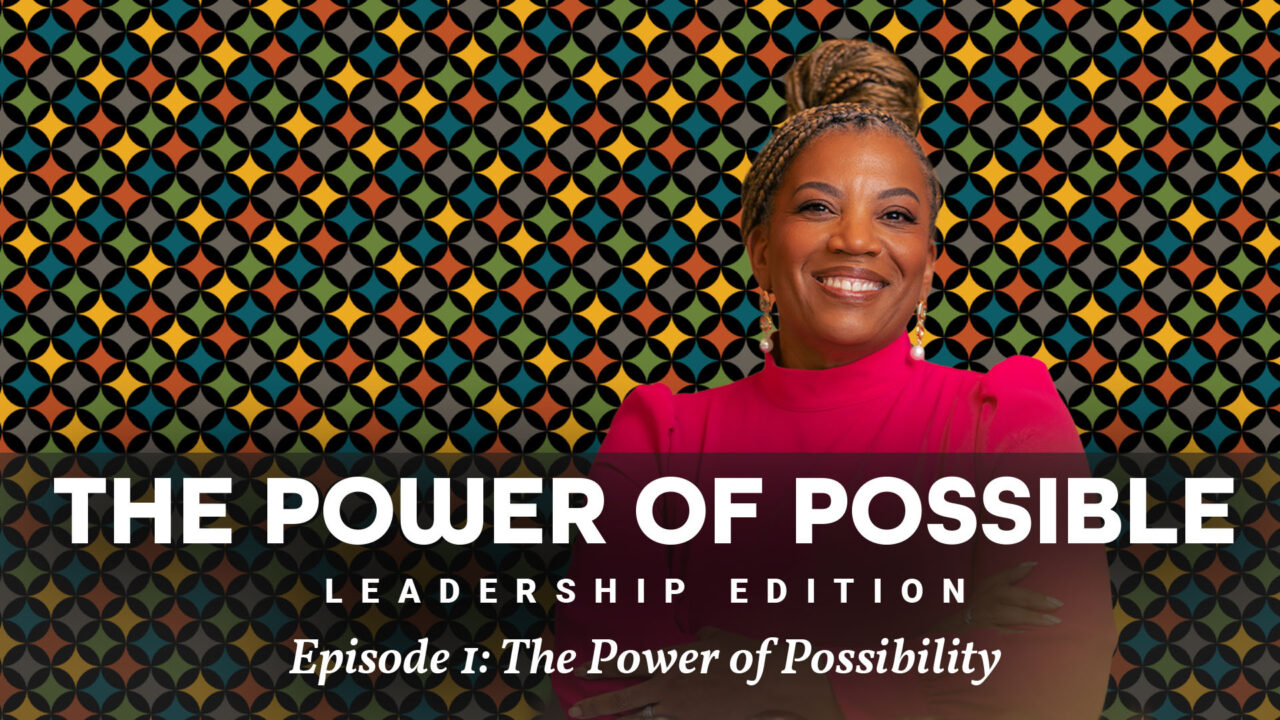
This is the opening episode of The Power of Possible: Leadership Edition, an eight-episode leadership podcast and video series featuring conversations between leadership coach Dr. Tashion Macon and the Foundation’s President and CEO, Chanda Smith Baker. Created for this moment — and for the leaders navigating it — the series offers listeners candid conversations on leadership growth as it happens, in real time, shaped by lived experience, tested by uncertainty, and strengthened through relationships.
In this first episode, Dr. Tashion Macon sits down with Chanda to explore what it means to lead with possibility. Chanda reflects on how growing up in North Minneapolis shaped her perspective as she watched strength, creativity and resilience take root in places often overlooked. Those experiences helped her understand that possibility isn’t defined by circumstance; it’s something leaders can see, cultivate and carry forward in the way they show up. This conversation offers an honest look at leadership as an ongoing journey of growth and self-discovery.
Throughout the episode, Tashion and Chanda reflect on the idea that leadership isn’t something you switch on for certain moments — it’s who you are everywhere. They underscore the importance of self-awareness, strong relationships and staying grounded in your values, especially when navigating challenges. At its core, the conversation expands the idea of possibility beyond individual success, emphasizing how stepping into your own potential can create pathways for others. With reflections on humility, humor and the realities of leadership along the way, this episode sets the tone for the series: a powerful, grounded invitation to lead with intention and to keep stretching what feels possible — for yourself and for the communities you belong to.
Watch Now
Listen Now
Find The Power of Possible: Leadership Edition wherever you get your podcasts, including Spotify, Apple Podcasts, Amazon Music, and more.
Show Notes
This is the opening episode of the Power of Possible: Leadership Edition, an eight-episode leadership podcast and video series featuring conversations between leadership coach Dr. Tashion Macon and the Foundation’s President and CEO, Chanda Smith Baker. Created for this moment — and for the leaders navigating it — the series offers listeners candid conversations on leadership growth as it happens, in real time, shaped by lived experience, tested by uncertainty, and strengthened through relationships.
In this first episode, Dr. Tashion Macon sits down with Chanda to explore what it means to lead with possibility. Chanda reflects on how growing up in North Minneapolis shaped her perspective as she watched strength, creativity and resilience take root in places often overlooked. Those experiences helped her understand that possibility isn’t defined by circumstance; it’s something leaders can see, cultivate and carry forward in the way they show up. This conversation offers an honest look at leadership as an ongoing journey of growth and self-discovery.
Throughout the episode, Tashion and Chanda reflect on the idea that leadership isn’t something you switch on for certain moments — it’s who you are everywhere. They underscore the importance of self-awareness, strong relationships and staying grounded in your values, especially when navigating challenges. At its core, the conversation expands the idea of possibility beyond individual success, emphasizing how stepping into your own potential can create pathways for others. With reflections on humility, humor and the realities of leadership along the way, this episode sets the tone for the series: a powerful, grounded invitation to lead with intention and to keep stretching what feels possible — for yourself and for the communities you belong to.
Quotes
“If you can do more with a little. You can do more with a lot.”
“You're not a leader in one context and not in another. Who you are is where you are everywhere.”
“In leadership, leaders talk about how it's an isolating role – that, it’s all these things. That is true. But it can also be not true depending upon how you design for your leadership, and especially if you know what you need.”
“Perfection can be a problem. I hold the bar. Excellence is where I want to be, but that does not mean perfection. Perfection can hold you hostage.”
Tashion Macon (00:00):
Hello, everyone. I'm Dr. Tashion Macon.
Chanda Smith Baker (00:03):
And I'm Chanda Smith Baker, the president and CEO of the Saint Paul and Minnesota Foundation.
Tashion Macon (00:08):
Together, we're opening up leadership conversations we've been having for a long time with each other and others, because we've witnessed how powerful it is to explore these ideas out loud, and this is The Power of Possible Leadership Edition.
(00:29):
Hello, everyone. I'm Dr. Tashion Macon, and I'm inviting you into a conversation about a simple idea with very big impact, The Power Of Possible. I'm talking with Chanda Smith Baker, president and CEO of the Saint Paul and Minnesota Foundation, about what The Power of Possible can mean for leadership. Over the years, I've had the opportunity to watch Chanda grow into her leadership while navigating countless obstacles that could have narrowed what felt achievable, but instead, expanded it. Today and throughout this entire series, we're going to examine how her commitment to keeping possibility alive even in the most challenging circumstances has shaped her leadership, strengthened her impact, and open doors, not just for herself, but for others, and we'll explore how you can do the same in your own leadership journey. Let's get started. You're going to enjoy it.
(01:37):
It's so good to be with you again today.
Chanda Smith Baker (01:44):
Well, it's good to see you.
Tashion Macon (01:45):
Good to see you too. So today, we're talking about this wonderful new series that is being launched by the Saint Paul Minnesota Foundation, The Power of Possible, and we're talking about it through the context of leadership. And as I reflected on this series and this actual episode, I thought about what it has meant to me over the last eight years of our working together to witness your growth, your stretch, your winning, and what it means to be in this partnership with you as we experience holding space for your being and your becoming at the same time. So what has The Power of Possible or what does The Power of Possible mean for you through the lens of leadership?
Chanda Smith Baker (02:34):
I come from North Minneapolis. I come from a neighborhood that has been devalued, where it has had a narrative for many people outside of that neighborhood that have made a decision about who lives there, what the problems are, and what the solutions are. And I think that that has informed me in so many ways so that when there is a narrative over you that says you can't do because of whatever reasons, and then I witness the genius that lives there, I witness the evolution of what leadership looks like on the streets, how it looks in the home, how it looks in the neighborhood, and how people have moved into positions of great inspiration that have lived there, that have been supported there, then for me, it means from a leadership perspective, the possible always sits. Because if it is possible to emerge from situations in which people think there's no trajectory for success, and I've witnessed it, then it means it's available to everybody.
(03:55):
We're sitting in Saint Paul in the East Metro where we have a mayor that moved here from a war when she was three. First in her family to graduate, to go to college, to work and now to be the first female mayor, that's one generation of possible. Is it possible to leave your home country and not have a dime? Well, it was possible because they did it. Is it possible for someone to graduate and that hasn't happened before? Well, it's possible because she did it. And I think that if we listen and if we see success and all the ways in which it shows up, then I don't know how it doesn't inspire leaders to just do a little bit more, especially those that come for more, because if you can do it with a little, you can do more with a lot.
Tashion Macon (04:48):
I also love how I've often heard you share about coming from the kitchen table to the corporate table, and what happens in homes. At every iteration of existence, leadership can show up. Share a little bit more about that, contextualize that in your creative way as you usually do.
Chanda Smith Baker (05:09):
Yeah, I don't know. What comes up for me is that you're not a leader in one context and not in another. Who you are is where you are everywhere, and I think there is a demonstration that is important to me that I have a congruency, that even when I don't believe something is possible, I know that I have people around me that will hold that possibility for me. Because I have been intentional about curating, protecting, nurturing relationships around me that mirror back to me not just, "You're doing a good job," but, "You can do a better job. I see more in you. You can dig deeper," and I think that's really, really important for a number of reasons.
(06:08):
One is that there's often not safety and being transparent or being open to hearing where you need to improve. Safety has to exist there, and for me, being able to move forward means I have to be as self-aware as possible. It doesn't mean I have to be perfect. It means I have to be self-aware. I have to know where I am strong and I had to wrestle down the areas that held me back, and I've had a few where I actually recognize if I don't tackle this, I'm not even going to be able to get to where I see myself.
Tashion Macon (06:54):
Talk about the tackle. Just name one thing that you tackled down. And again, I've shared that it's been beautiful to bear witness to your growing, your stretching, and your winning.
Chanda Smith Baker (07:07):
Yeah. Okay.
Tashion Macon (07:08):
So talk about the tackle. What did you tackle down?
Chanda Smith Baker (07:10):
Oh, public speaking.
Tashion Macon (07:13):
And we are actually on a podcast right now, people.
Chanda Smith Baker (07:15):
Look at me.
Tashion Macon (07:16):
Look at you. Keep going.
Chanda Smith Baker (07:22):
Progress, progress. Leadership as I witnessed it was extroverted and loud and dynamic and taking over the room, and I did not see myself that way. I was and am and can be a little bit more reserved. I like to be in a book. It takes energy for me to be in a crowd, and so as a result of that, I didn't see myself upfront. It wasn't until I decided that if I didn't at least get more comfortable with either who I was stylistically ... Let me just say that. I got more comfortable with who I was, and once I got comfortable with that, I had to move from comparing myself to understanding my own leadership.
Tashion Macon (08:09):
Absolutely.
Chanda Smith Baker (08:10):
I had to understand what is possible based on who I am and what I desire, and once I did that, I kept stepping one foot in front of the other until I moved into space, and then I look back and I'm like, "Man, I didn't even realize how far I was coming as I was going there." But that is one that I talk about often of just getting up in front of a crowd, and if people knew that journey ...
Tashion Macon (08:35):
They would know.
Chanda Smith Baker (08:36):
They would know. It was a journey-
Tashion Macon (08:37):
Of power.
Chanda Smith Baker (08:38):
Of possible. Yeah,
Tashion Macon (08:41):
I see that you've actually, you've been on that journey with a lot of intentionality. What I really respect and honor, one of the critical things is the authenticity by which you did it. You didn't shift into anyone else. To your point, you were self-aware, you found the seat of your soul in that way and then you actualized it, and I do think that that is really indicative of what The Power of Possible is in leadership and that it is not a replication of anyone else. It is the reality of who you really are, and it is a privilege and an honor to witness this. And I'm excited for everyone else who's going to tune in to this leadership series about The Power of Possible, because you do embody it.
Chanda Smith Baker (09:30):
Yeah. Thank you for that. And I think I'm coming off of a luncheon that talks about the state of women in leadership, and there was a fantastic panel that was there, is every year with Twin Cities Business, and every year, there's the woman on there that says, "I was the first woman or I was a woman in a male dominated space, or I'm the first CEO. I was the first woman to be in this board seat," whatever the first is. And in order to be in those seats, you have to believe you belong in those seats, even if there is a narrative or data-
Tashion Macon (10:05):
That says differently.
Chanda Smith Baker (10:06):
That says different. That The Power of Possible is not a selfish act. It is an act in service.
Tashion Macon (10:16):
Good.
Chanda Smith Baker (10:17):
And I believe that it is an act in service that allows someone else to see what's possible for them because they can see it. Many times, it's like, "I saw this woman do this thing, or I saw this person do this thing, and when I saw it, they were a reflection of me, and therefore, I knew," and I think that is the power. The power of being louder in your dreams and your vision is that it's not just about your progress, it's about our collective progress.
Tashion Macon (10:46):
I love how you shared about The Power of Possible from the kitchen table to the corporate table, and what I hear is that in your work, you often share about this internal address of understanding where that is. Can you unpack that a little bit more?
Chanda Smith Baker (11:01):
I'm trying to articulate what I know into words that other people can understand, and so I appreciate the question and I think I'll go back to knowing yourself.
Tashion Macon (11:15):
That's good.
(11:16):
The more you know your leadership style, what's important, what your values are, it becomes easier to have somewhere to go back to. When you don't have those things, it's easy to be brought somewhere, and you end up at an address you didn't even know how you got there. That to me is somewhere I don't want to be. So for me, a couple of things. One is I believe in what I feel. I can be logical about a lot of things, but I trust my intuition. I absolutely trust that even when logic says different, I'm willing to bet on me. I'm willing to bet on my gut, and I think that's important because it has been practiced.
Tashion Macon (12:05):
Practiced. That's good.
Chanda Smith Baker (12:07):
Right? And I know what it means when I haven't done that. When I felt a thing, I knew a thing and I went another direction, and then I have to sit in reflection and say, "Why didn't I believe me?" And I am not saying that I have it perfected, but I am saying that it is my natural way of leading to go back, get the information, and say, "What is it telling me? What do I need to do with that? How do I center myself so that I make the best decisions? How do I have the right reflection? Have I talked to enough people?" So I have almost a set of questions that if I spent more time, I'd be able to say, "Here's what my process is."
(12:52):
Similarly, I'll give an example as a parent. The kids would say, "Mom, can I go?" "No. No." And I would say, "Why am I saying no?" So I would sit in it. Is it because I'm tired? Is it because I don't want to give them a ride? Why am I saying no? Decision fatigue. And then I'd come back and say, "Well, actually it's a no because I don't want to give them a ride." And then I'll say, "Actually, I don't mind if you go, if you have a way there." And so I think that I've practiced it both in my life ... I practiced it in my life, and it shows up in all the places I am in life, of me saying, "Why am I feeling a way?"
(13:37):
And I think that oftentimes, we move in a routine. We move in rote ways that often don't give us the opportunity to reflect and ground and come back to that address. So even in that, it is an intentional decision of reflection and slowing down and getting to that balcony and saying, "Where am I at? Who am I at in this moment? Who am I responsible for? Who benefits from this? How does it stretch me? What could I learn?" Just a series of questions. And so I don't know if I have a better answer. I have a process.
Tashion Macon (14:15):
And I think I love how you probe yourself. I think that when we talk about an internal address, I think about like real estate, what's the location? It's like location, location, location, so what's the leadership location you want to land in? And then exploring all the circumstances, and in your language, can we create the conditions by which circumstantially, people are better off, communities are not simply surviving but they're thriving? My leadership isn't simply rote, but it's reflective, and that reflection gives new revelation to the work.
Chanda Smith Baker (14:55):
Yeah. And if I put theory to it, it would say that as a leader, I'm responsible largely of being socially and emotionally smart, social and emotional IQ. That my emotional IQ always has me come back because I am aware of who I am and how I am in every space. I have to be clear on how I feel and how I'm reacting to everything. There's a level of measured that is not performative. There's a level of measure that allows me to perform in my best self because I'm smart about me.
Tashion Macon (15:34):
Conscious.
Chanda Smith Baker (15:35):
I'm conscious of my leadership.
Tashion Macon (15:38):
That's good stuff. That is the power of possible, even being conscious of your leadership, your leadership lens, your leadership approach. So we're going to talk a little bit about how we met, and I think it's really, really, really beautiful. About eight years ago, over eight years ago, we happened to be in a shared space. It was a cohort, and just for the people watching, you just have a dynamic leader, a woman who is, as you probably heard, really crystal clear about herself. And so we had an exchange and she was sharing a perspective. I was deeply listening, and she said, "Well, what do you think about that?" I said, "It's too small."
Chanda Smith Baker (16:25):
Is that what you said?
Tashion Macon (16:27):
No. What I said was, "It's not big enough." And she said, "What?" I said, "Just not big enough. As I'm witnessing you, as I'm experiencing you in your being, there are things I'm hearing acutely that that just is not big enough." And I think it kind of shocked you a little bit. Did it shock you a little bit?
Chanda Smith Baker (16:56):
People are telling me what I say is good, and that's not what you did, and so I appreciated it because I was in a moment, I can't quite say I was stuck. I won't quite say I was hitting a wall, I won't quite say I wasn't satisfied, but I was in a moment where I knew something had to break through. It was just something that was nagging at me, and so part of the question was where do you see yourself? And so I remember being very thoughtful and writing stuff down and coming in and sitting down, and if I recall what you said was, "I've only known you for a few minutes and I know this isn't big enough."
Tashion Macon (17:42):
Yeah, that's a direct quote, people.
Chanda Smith Baker (17:45):
Yeah. Right? And so I do know that sometimes you need a moment, and so whatever season I was in, I was feeling like I was playing small. I couldn't have articulated in that moment, so then when I come in and I give you my thing and you're like, "It's small," you reflected back to me what was in me that I couldn't quite articulate in the moment, and then it started what is possible? What is possible? Why am I limiting what's possible for me? Why am I not dreaming as big as I can? Why am I stuck?
Tashion Macon (18:35):
And I think dreaming as big as you're being, I think one of the things I have had the honor of witnessing when I get to do this work, you'll hear a lot about coaching, leadership coaching and all of those things. I often think without the partnership of possibility, you can get stuck, it can seem rote. What I have enjoyed about you and women like you that I get to work with, and that's a privilege and an honor for me, is to hold your being, the space for your being. This is where you are, but it's not just who you are. This is where you are, but who you are is all the way over here, and can we hold the space? Can I be in partnership with you about that possibility, about that spaciousness as you actually created and curated in ways that are authentic for you?
(19:36):
And so yeah, over the last eight years, it's just been fabulous to witness, and it's really people. It's really, great coaches coach great people, and that's often ... You got to participate in that, and I want to thank you for participating on that journey. It is an honor to see you standing in the space of your spaciousness, and with the power of possibility, the best is even yet to come.
Chanda Smith Baker (20:09):
Yeah. Even in leadership, you have moments that feel dark or you have moments in which you feel stuck, and I think sometimes, there's like an arrival, and when you arrive, you stay, and then it's like you've got there and it's stagnant. And I think what I've appreciated and my location is always what's next? What else can I do? What else can I deliver upon? And I think the importance of having people around you that hold that intention is that when you get in those moments, they remind you. Because we talk a lot in leadership, leaders all the time, it's an isolating role, it's all these things. That is true, but it also can be not true, depending on how you design for your leadership, and especially if you know what you need.
Tashion Macon (21:03):
And I think what I love about that is, to be frank, there's an invitation to innovation with you, there's an invitation to imagination with you, and I think when you talk about this commitment to continually actualize, I think that is a decision leaders can make. I do understand the isolation of leadership. I don't want to minimize that or marginalize it, and also, the air does get thinner as you go higher. But I also think you have to be more intentional about your counsel around you so that you continue to invite imagination, continue to invite interrogation. Interrogating the thing. "I did this for the last two years or three years. Is it right for the moment I'm in now?" And holding the space where there is no judgment for that interrogation, but it is an invitation to imagine and have some ingenuity and some innovation, so that's been a privilege to witness with you.
Chanda Smith Baker (22:06):
Can we talk about the importance of some levity?
Tashion Macon (22:09):
Okay. So let's talk about even in the Power of Possibility and leadership levity. Let's talk about that, the necessity of levity in this work.
Chanda Smith Baker (22:21):
Yeah, because everything's not that serious.
Tashion Macon (22:22):
Right.
Chanda Smith Baker (22:24):
Right? And the work can be heavy, and I work in a sector that is all about making sure everyone has what they need, which means a big part of the conversation is what is not available?
Tashion Macon (22:37):
Good stuff. Yeah.
Chanda Smith Baker (22:37):
And that can be heavy. And I will tell you the truth, that without balance, it would be a much harder role to have. So being able to laugh through the moments, to be able to laugh at myself. The freedom of being able to laugh at yourself, to say, "Yeah, I don't know why I did that. It felt like a good idea," and to be able to go back and say, "Look, I missed the mark. Here's where I was going," and just to laugh about it, because perfection can be a problem. I hold the bar. Excellence is where I want to be, but that does not mean perfection. Perfection can hold you hostage. And I think levity and understanding that laughter and joy and the moments in between matter as much as when you are on the stage and being witness. You have to have these other moments.
Tashion Macon (23:47):
And I think it humanizes you. Leadership levity humanizes you, and when you are moderating or when you are the keynote speaker, there's a reason one of the key components of being a keynote speaker is to start with a joke. That leadership levity actually brings you into collective connection instantaneously, and I think when I hear you talk about leadership levity, it goes back to you being community centered, wanting to be in connection, wanting to be in care with those around you, whether it's leading up, leading down, leading all around. And on that note, The Power of Possible.
Let’s Stay Connected
Sign up for the Saint Paul & Minnesota Foundation newsletter to get involved with your community, read stories of nonprofits doing great work, and get tips and tricks on maximizing your impact on your favorite causes.