
The Power of Possible: Leadership Edition
Leading with Trust and Vulnerability
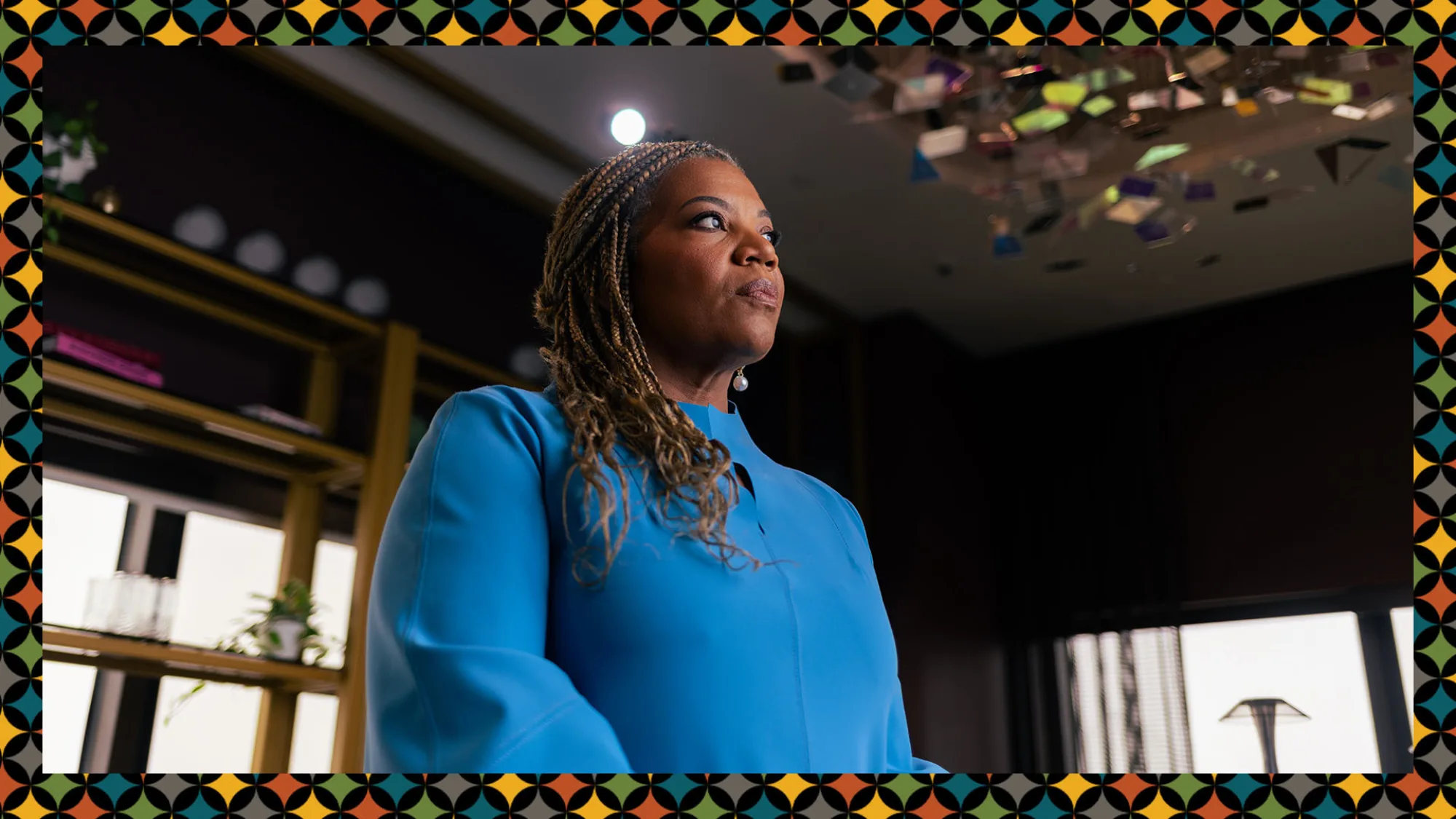
Leading with Trust and Vulnerability: How do we best lead across differences? | Practices to grow through discomfort
In this episode of The Power of Possible: Leadership Edition, Dr. Tashion Macon and Chanda Smith Baker explore what it really means to lead with trust and vulnerability — especially when working across difference. The conversation centers on the idea that effective leadership isn’t about avoiding discomfort but learning how to stay in it long enough to understand it. Chanda reflects on how she approaches difference not as something to overcome, but as something to learn from — listening deeply, seeking out multiple perspectives, and staying curious even when values or experiences don’t align. For her, working across difference is not optional; it’s essential to building meaningful solutions and stronger communities.
Chanda emphasizes that trust grows in moments when things don’t go as planned, when people feel safe enough to speak up and work through challenges together. She also reflects on the importance of courage in leadership, encouraging listeners to intentionally put themselves in unfamiliar situations as a way to grow. Ultimately, the episode is a grounded look at what it takes to lead in relationship with others—showing up with authenticity, staying committed to understanding, and building trust in ways that create lasting connections across teams, communities, and differences.
Watch Now
Listen Now
Find The Power of Possible: Leadership Edition wherever you get your podcasts, including Spotify, Apple Podcasts, Amazon Music, and more.
Show Notes
In this episode of The Power of Possible, Dr. Tashion Macon and Chanda Smith Baker explore what it really means to lead with trust and vulnerability—especially when working across difference. The conversation centers on the idea that effective leadership isn’t about avoiding discomfort but learning how to stay in it long enough to understand it. Chanda reflects on how she approaches difference not as something to overcome, but as something to learn from—listening deeply, seeking out multiple perspectives, and staying curious even when values or experiences don’t align. For her, working across difference is not optional; it’s essential to building meaningful solutions and stronger communities.
Chanda emphasizes that trust grows in moments when things don’t go as planned, when people feel safe enough to speak up and work through challenges together. She also reflects on the importance of courage in leadership, encouraging listeners to intentionally put themselves in unfamiliar situations as a way to grow. Ultimately, the episode is a grounded look at what it takes to lead in relationship with others—showing up with authenticity, staying committed to understanding, and building trust in ways that create lasting connections across teams, communities, and differences.
Quotes
About working across difference and discourse: “Yeah, I mean, I think I would start to say you should expect it. And if you're not experiencing it, it means that you are not in a diverse enough environment.”
“Being uncomfortable almost in any situation requires practice. and it's not different with discourse, right? It's not different with listening. Difference, I don't think is the key. I actually think it's when you are with someone who doesn't feel values aligned. I think that's a different experience, where people are so held to their belief that they can't understand why somebody else will believe something different. “
“In my work ‘community’ is any neighbor, any resident of this state. I am part of multiple communities.”
“And so what I would offer is: if you're engaged with us, you're going to get a sense of the breadth of relationships that we have across the state. Our work impacts all 87 counties we fund. We have partners across the state. So I don't feel like I need to be an expert. I need to be in relationship with people that have relationships in the communities that we're working in. And we have that, we have a network that has been intentionally designed for us to understand, listen and respond.”
“Put yourself in situations where you're a beginner. If you only go in places that you're already confident. How do you build confidence? You have created a mirror of yourself from a place of comfort. But if you step in and things that you're uncomfortable doing, where you're a beginner, that takes courage just to do that. And you are going to go in that space. You may not know the people. You may not understand the language. You may not understand the jokes. You may not understand the history, but pretty soon you can you will be telling the jokes. You'll be sharing the history. You'll be welcoming someone else in that was in the same place as you.”
“Trust happens when something doesn't work. Like you build it but when you prove that you can trust me, you can trust me to tell you something that didn't work, and we'll figure it out together, because we're on the same team.”
References
Teaming: How Organizations Learn, Innovate, and Compete in the Knowledge Economy 1st Edition by Amy C. Edmondson (Author)
Tashion Macon (00:00):
Hello everyone. I'm Dr. Tashion Macon.
Chanda Smith Baker (00:03):
And I'm Chanda Smith Baker, the president and CEO of the Saint Paul & Minnesota Foundation.
Tashion Macon (00:08):
Together, we're opening up leadership conversations we've been having for a long time with each other and others because we've witnessed how powerful it is to explore these ideas out loud. And this is the Power of Possible Leadership Edition.
(00:29):
In my work with leaders, I've seen how rarely leaders are truly willing to be changed by what they hear. Chanda Smith Baker is the exception. Real listening, the kind that costs you something, is one of her deepest leadership commitments. And in this conversation, she tells you why. I'm Dr. Tashion Macon. Today we go deep on two things that belong together, working across difference and building trust. Chanda talks about staying curious no matter how far you've come and what it actually looks like to lead with vulnerability instead of just talking about it. This one stayed with me long after we finished chatting. I think it'll do the same for you.
(01:21):
So Chanda, today we want to delve a little bit deeper in context around what it means to work across difference. What we know from your team and things that we've observed in your leadership approach is that part of your hallmark is the belief that partnership and broad-based support are important for collective movement building. So delve a little bit deeper around how to sit with the discomfort of difference and the discomfort sometimes in discourse. How do you navigate that and how would you advise others in leadership to potentially navigate that?
Chanda Smith Baker (02:04):
Yeah. I mean, I think I would start to say you should expect it. And if you're not experiencing it, it means that you are not in a diverse enough environment. So that's the first thing that I would offer is that being comfortable almost in any situation requires practice and it's not different with discourse. It's not different with listening. Difference I don't think is the key. I actually think it's when you are with someone who doesn't feel values aligned. I think that's a different experience where people are so held to their belief that they can't understand why somebody else would believe something different.
Tashion Macon (02:43):
Something different. So how does the light break through that kind of darkness if there is a difference or values alignment difference?
Chanda Smith Baker (02:55):
Yeah. These are good questions because I am so comfortable in that space that I have to think more deeply about how I approach it. I think part of it for me is not focusing on the difference or if I'm focusing on the difference, I'm focusing on it for understanding. So from a leadership point of view, if I am delivering a program, if I'm trying to create a business, if I'm trying to create something, it is best for me to understand all of the points of view of people that are going to be interacting with whatever it is that I've designed. And so if I am sitting across the table from someone that has that opinion, someone else has that opinion. So how do I account for it? How do I assess whether or not that difference is necessary for contribution? And most of the time I find that it can be. You just got to figure out where it sits.
Tashion Macon (03:52):
And particularly in community, how do you prioritize the voices that are closest to not simply the problems but the solutions too? How do you prioritize their voice?
Chanda Smith Baker (04:06):
What I find fascinating or what has evolved over time is how you hear community. So I sit in community. I have people around me that are proximate. I have built trust so people call me on issues. Social media is an interesting beast, but one thing it will tell you is what people think.
Tashion Macon (04:27):
Right, right, right.
Chanda Smith Baker (04:29):
So if you know who to go to, right? Because even in community, I can find five different opinions on the same issue. So if I hear the opinions, if I hear even different data at times, it is how do I elevate it to what people care about? How am I elevating? How do I move above the noise so that I can hear the thread so that I can understand what's possible so I can see the opportunity despite the disagreement?
Tashion Macon (05:02):
I think what you offer about social media is really powerful. We've saw the rise of the citizen journalists or the community journalists, and hurt and harm are no longer hidden. It moves at the speed of light. And when we speak about social media and how quickly from all the atrocities that are happening in Minnesota and nationally, how does it sit with you when you get the notice on social media that it's almost like a megaphone, "This has happened in your city," and how do you react to that?
Chanda Smith Baker (05:44):
I think the first thing I do is center myself. The second thing I do is assess and figure out could it impact one of my kids? Where are they? What's happening? Both from a physical perspective, but also an emotional perspective. "There's a video out, I'm sure you're going to watch it. Guard your heart. I'm sure you're going to watch it. You all have conversation with each other about it. Keep it in perspective. Where you see death, there's life." So find some way to balance yourself as you move throughout the day. It's the very first thing I always will do.
(06:21):
I say me, family, then I go to team. How do I manage a team? How do I think through where all their emotions are going to be? This news is too distracting to move forward. So how do I create space? How do I add perspective? How can I create balance, particularly if we have a role to play in responding to whatever that crisis is?
Tashion Macon (06:46):
And so what would you say to donors who want to fund organizations, specifically organizations that value partnership and collaboration across difference? What should they look for?
Chanda Smith Baker (07:00):
They should look for the demonstration of it.
Tashion Macon (07:03):
Unpack that more for me.
Chanda Smith Baker (07:13):
So we sit in a performance environment. There are people that speak up quickly, that mean what they say. It's aspirational.
Tashion Macon (07:30):
Okay.
Chanda Smith Baker (07:32):
There are other people that say what they're doing because they've been doing it. So I think there's a demonstration. I guess I would offer even additional context, is that community, when you say listening to community, that by itself brings up a who in people's minds. In my work, community is any neighbor, any resident of this state. I am part of multiple communities and I respect them. I'm in the Black community. I'm in Saint Paul, I'm a woman, like I'm a mother. I'm in a church community. I'm in many communities that have multiple identities. And I think that it is important to understand which lens you're listening to and understand what issue you are thinking about.
(08:28):
So if I'm responding to George Floyd's murder and I want to listen to community, I'm going to listen to community that is closest to a negative experience with the police. I'm going to listen to the people that are most worried about it happening to them. I'm going to listen to experts that have been doing work in reducing police violence against community. I'm going to listen to psychologists that are talking about the demands on the police department and what's needed to make them more balanced and ready to police community. I'm going to listen to them.
(09:05):
So I think that part of the conversation is if you only have the same group and you're listening to the same group every single time an issue comes up, how is it possible that they're the expert?
Tashion Macon (09:16):
Right, right.
Chanda Smith Baker (09:17):
How is that possible? And so what I would offer is if you're engaged with us, you're going to get a sense of the breadth of relationships that we have across the state. Our work impacts all 87 counties. We fund, we have partners across the state. So I don't feel like I need to be an expert. I need to be in relationship with people that have relationships in the communities that we're working in and we have that. We have a network that has been intentionally designed for us to understand, listen, and respond.
Tashion Macon (09:50):
I love that. And I think I really love how you're speaking about the 87 counties. And sometimes I do think people nationally can look at Saint Paul Minneapolis and think of Minnesota as just this place, but to contextualize the fact that the Saint Paul Minnesota Foundation is committed to 87 counties and committed to holding space for 87 counties and understanding the relationships needed to build partnership and collaboration in those places. Thank you. Thank you so much for sharing that because I think it's also important. It's important for the work and I love how you're talking about being in a performative culture and sometimes a performative sector. And so demonstration, look for the demonstration.
Chanda Smith Baker (10:49):
Look for the demonstration and intention is not a bad thing. Some new information can come into relationship with you and then you decide you're taking a different pathway. This is not a judgment, but it is a response to, if you're looking for someone that's ready, you have to see that they have proof points. You can come on board and you're carting a new path and I think both things are needed in the work.
Tashion Macon (11:17):
And just talking about new pathways or even needing to pivot at different times or swerve at different times, it's a perfect segue to the question I have about leading with trust. How do you build accountability without control beyond compliance, but more towards trust based systems, trust based leadership? How do you do that?
Chanda Smith Baker (11:44):
I mean, to me, all of this is about demonstrating what trust looks like. And like most relationships, trust happens when something doesn't work. You build it when you prove that you can trust me, you can trust me to tell you, "Tell me something that didn't work and we'll figure it out together because we're on the same team."
(12:03):
So I think from an organizational perspective and there's lots of research on this coming out of, I don't know, a book called Teaming. And they're looking at hospitals, hospitals that have more critical mistakes versus those that don't. The difference is the environment, the culture, the trust of the team to know that they can bring up something that didn't work without consequence, but they can be involved with the solution to make sure that it either doesn't happen again or they can catch things early. And I think that is not different in the work that we have, that we have to create the conditions for trust to be built.
(12:39):
Now, the way that I come into work is I want to know you and I want you to know me because it's just not about the task, it's about who you're in partnership with. So that curiosity that sits with me sits in how I engage with people. I think there's a level of vulnerability in trust. There's a level of I think opening up that may not feel as comfortable as necessary, but in a time where there is so much noise, being able to be authentic and in relationship I think creates the foundation for good partnerships that happen.
Tashion Macon (13:19):
I have the particular privilege of hearing you speak about the theory of triangulation and how it shows up. In a corporate setting, how do you teach a team to unlearn triangulation?
Chanda Smith Baker (13:48):
Oh, Lord. There are behaviors that happen in a workplace or in life, any situation that come from a couple places, a lack of confidence, trained, the environment doesn't respond to your need. So you go around. The system isn't working so there's workarounds. The belief that you don't hold power.
Tashion Macon (14:14):
Wow.
Chanda Smith Baker (14:16):
A lack of confidence in your ability to influence. Manipulation is learned. So I think all of these things factor into triangulation. It is unhealthy and I have to distinguish between a work situation in which someone needs to vent because we all need avenues to get things out of our body to talk them through.
Tashion Macon (14:42):
Right, right.
Chanda Smith Baker (14:43):
I think that is very different when you're talking something through to get to a better place than talking something through to get people on your side or to undermine a situation. So I do listen for intention. I also respond to impact. So, "I get it wasn't your intention, but your impact was destructive for the path that we were headed on. Why? Why? Why? Why? And what was missing or what wasn't in place that would have allowed you to have the conversation more directly?"
Tashion Macon (15:27):
And so it's like you seek to learn around what are the motivations or I get your intention, but this is how it landed, which means this is your impact. And then if it did, if the impact was less than favorable, you seek to understand what may have been motivating that, what, the why, the how. And I think a lot of times we forget that people bring their whole selves to work. They bring their whole selves and sometimes the person that shows up in a boardroom that may not be their best self in the moment, a lot of times it may be the teenage self that wasn't listened to or heard, right?
Chanda Smith Baker (16:19):
Yeah.
Tashion Macon (16:20):
And so I think your approach to say, "Okay, what, why and how," actually make space to-
Chanda Smith Baker (16:26):
Yeah. I had a mentor a while ago and actually I was going through a life training, a life coaching certification program. And I remember what stood out during that training is understanding the lens in which you listen.
Tashion Macon (16:43):
Oh, yeah.
Chanda Smith Baker (16:44):
Right? Some people listen, am I respected enough? Am I smart enough? Am I pretty enough? Right? Whatever the enough is, I think part of listening and observing and leadership is understanding who you're working with and what their lenses are. It's not about them just understanding me, it's about me understanding them so that if I'm talking to someone who is doing something and I understand their lens, I'm better able to provide advice or coaching that will resonate with where they're at so that I can get them to go where we need them to go for the organization.
(17:22):
An example recent would be in Minnesota with after the Alex Pretti shooting, right?
Tashion Macon (17:34):
Yeah.
Chanda Smith Baker (17:34):
There was lots of energy around that. I don't hear everything but I hear enough. I heard enough to know that there was people challenging whether or not we were doing enough as an organization. So do I ignore that or do I respond to it? I could respond to it and validate the emotion without agreeing with the sentiment. We work in partnership with people, with donors, and in community. There's a role that we play, which is to make sure that we're in solidarity with the communities that we're working in, that we are listening, that we are providing resources for them to do their best work. That is our everyday commitment to the state. And it's just more intense in these moments that just because everyone else is loud doesn't mean that they are doing more work. We're conflating energy and it's the whole thing, if you didn't see the tree fall in the forest, right?
Tashion Macon (18:46):
Right.
Chanda Smith Baker (18:48):
In moments of crisis you're not going to know every move, you're not going to see everything. So how do I create confidence so that when these moments hit, every single person that works in that foundation, every single partner we have knows that we've been ready so we didn't have to get ready.
Tashion Macon (19:04):
Right.
Chanda Smith Baker (19:05):
And we're prepared to go. We're prepared to go, we're prepared to serve this state and we're going to do it with the same level of excellence that we've always done.
Tashion Macon (19:15):
I think what I love about even the lens of listening is the parody, the paradox of it. People think lens is seeing, but in this work, the lens of listening is a critical part of leadership. And I hear you speaking about confidence and I've heard you speak about curiosity and being courageous. What's one courage building practice listeners of this podcast can adopt to kind of normalize standing in truth, sharing their truth, truth telling? What's one practice that you might think of that they could utilize?
Chanda Smith Baker (20:00):
I mean, you got to put yourself in situations where you're a beginner.
Tashion Macon (20:05):
Unpack that.
Chanda Smith Baker (20:07):
If you only go in places that you're already confident, how do you build confidence?
Tashion Macon (20:12):
That's good stuff.
Chanda Smith Baker (20:13):
Right? You have created a mirror of yourself from a place of comfort, but if you step into things that you're uncomfortable doing where you're a beginner, that takes courage just to do that. And you are going to go in that space, you may not know the people, you may not understand the language, you may not understand the jokes, you may not understand the history, but pretty soon you will be telling the jokes, you'll be sharing the history, you'll be welcoming someone else in that was in the same place as you and learning a movement can feel seamless. Your discomfort doesn't last, but what we don't pay attention to is when we're no longer uncomfortable. There's a continuum of that and so part of what I would say about courage is that you have to intentionally practice it.
(21:07):
You control, you have more control of your leadership actions and learning. There are going to be moments. I step into moments all the time where I've never been in this situation before. I've just never been in a situation before.
Tashion Macon (21:22):
Right, right.
Chanda Smith Baker (21:22):
Right? I've never been in a situation where the government has sent armed agents into a community snatching people out of their homes and killing people. I've never been in that before and I was three months into this role, four months into this role. I'm still learning the team. I'm still learning the board. I'm still learning community from this perspective. I've never seen this before, yet and still, I have to respond with confidence. I have to bring a team along. I have to communicate from what I've known before because I stepped into leadership when the tornado hit, because I stepped into leadership when the bridge collapsed. I stepped into leadership when there were fires and floods and neighborhood shootings and whatever the thing is that maybe I didn't necessarily see myself doing, but the leadership demanded that I showed up. And so there are things that I bring every single time, but there's a confidence or a courage in stepping into spaces I have not been in before because I've practiced it.
Tashion Macon (22:36):
You've practiced... Just the practicing stepping into something as a beginner, I think that's really a critical point. Listeners, try that. Step into something as a beginner.
Let’s Stay Connected
Sign up for the Saint Paul & Minnesota Foundation newsletter to get involved with your community, read stories of nonprofits doing great work, and get tips and tricks on maximizing your impact on your favorite causes.