
The Power of Possible: Leadership Edition
Leading From the Middle
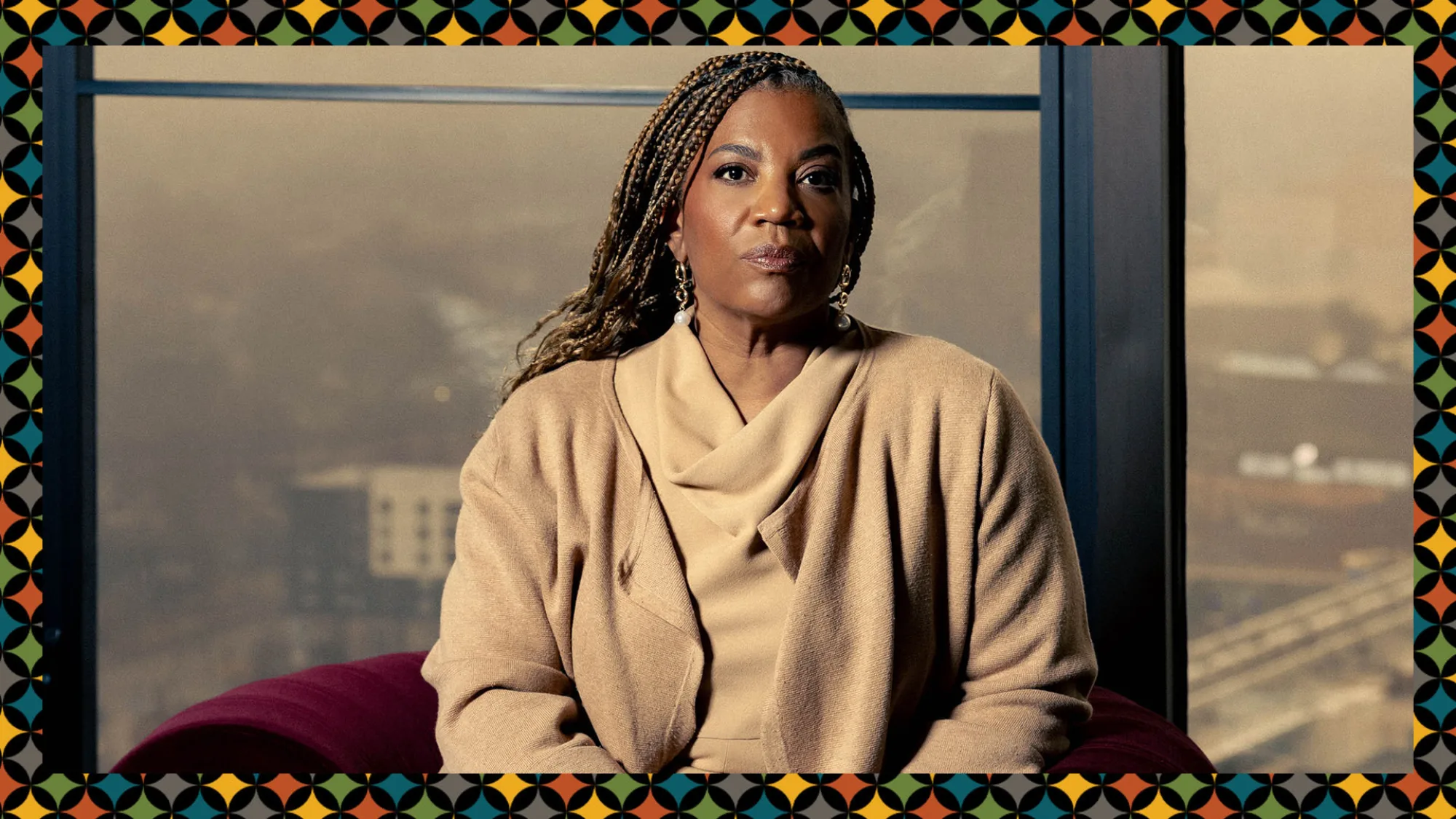
Leading From the Middle: What does “middle” leadership look like? | The advantage of knowing yourself
In this episode of The Power of Possible: Leadership Edition, Dr. Tashion Macon and Chanda Smith Baker explore what it means to “lead from the middle” — a leadership approach grounded in relationships. Rather than trying to fit a traditional mold of leadership, Chanda shares how knowing yourself becomes a true leadership advantage, even when it requires courage to show up fully. The conversation invites listeners to rethink what leadership looks like — shifting from perfection and performance to authenticity, self-awareness and connection.
Chanda also discusses her own journey of growth, including overcoming self-doubt, redefining imposter syndrome and building confidence through practice and support. She highlights the importance of surrounding yourself with people who challenge and reflect your potential back to you, and of stepping into spaces where you’re still learning. The conversation also extends to donors and community members, emphasizing that generosity and leadership are accessible to everyone. Whether you’re giving time, resources or simply showing up, leading from the middle means being in relationship — people, with community and with the possibility of creating impact that ripples outward in ways you may not fully see.
Watch Now
Listen Now
Find The Power of Possible: Leadership Edition wherever you get your podcasts, including Spotify, Apple Podcasts, Amazon Music, and more.
Show Notes
In this episode of The Power of Possible, Dr. Tashion Macon and Chanda Smith Baker explore what it means to “lead from the middle” — a leadership approach grounded in relationships. Rather than trying to fit a traditional mold of leadership, Chanda shares how knowing yourself becomes a true leadership advantage, even when it requires courage to show up fully. The conversation invites listeners to rethink what leadership looks like — shifting from perfection and performance to authenticity, self-awareness and connection.
Chanda also discusses her own journey of growth, including overcoming self-doubt, redefining imposter syndrome and building confidence through practice and support. She highlights the importance of surrounding yourself with people who challenge and reflect your potential back to you, and of stepping into spaces where you’re still learning. The conversation also extends to donors and community members, emphasizing that generosity and leadership are accessible to everyone. Whether you’re giving time, resources or simply showing up, leading from the middle means being in relationship — people, with community and with the possibility of creating impact that ripples outward in ways you may not fully see.
Quotes
“Imposter syndrome and negative self talk is very normal. I think the practice of intervening on yourself in the same way you would intervene on someone else you cared about is what you should be thinking about
For donors: “A lot of times what happens is that you have people that are new or want to be in a space and they’re not sure that space is for them. So what I would say is if you’re curious, call us, engage with us and see if we can match your curiosity, whether or not we can support your investment in community, and whether we can help you grow your own legacy of impact.”
“For the folks that have stepped into mutual aid, making a donation, being a volunteer, particularly in this season, I would pay attention to how it made you feel. And do you want to feel that way more? And if you do, then you’re a philanthropist.”
Tashion Macon (00:00):
Hello, everyone. I'm Dr. Tashion Macon.
Chanda Smith Baker (00:03):
And I'm Chanda Smith Baker, the president and CEO of the Saint Paul and Minnesota Foundation.
Tashion Macon (00:08):
Together, we're opening up leadership conversations we've been having for a long time with each other and others, because we've witnessed how powerful it is to explore these ideas out loud. And this is the Power of Possible Leadership Edition.
(00:28):
I spent real time with Chanda as her coach. And if I had to name the one thing that makes her leadership distinctive, it's this. She doesn't lead at community, she leads from within it. That's not a posture, that's a conviction.
(00:44):
I'm Dr. Tashion Macon, and in this episode we talk about what it means to know yourself so completely that it becomes your leadership superpower. Chanda talks about excellence over perfection. About authenticity as a practice, not a personality. And about why leading from the middle in deep relationship, not out in front and not set apart, is the only way she knows how to lead. This is a conversation I'd want every leader to hear. Let's get into it.
(01:24):
Chanda, we often hear about leadership approaches or leadership styles like leading from the front, leading from the back, leading from the side. And I'm fascinated by your leadership approach of leading from the middle. Talk a little bit about what that means for you, particularly as you build systems, influence systems, build up your team and build up community.
Chanda Smith Baker (01:54):
For me, my approach is to be centered and have team partners, community around me. It's the adage of what side of the elephant sort of deal. When I lead from the middle, I have the opportunity to see different perspectives and relationship with everyone that is leading with me. And that is my approach. I like to listen and hear across, not just from whoever's next.
Tashion Macon (02:24):
Yeah.
Chanda Smith Baker (02:24):
And that's important to me. It requires boundaries. It doesn't mean that I can't listen and I can't consider.
Tashion Macon (02:32):
What would you say to a person that's listening now to help them embrace their leadership, their natural leadership style? Because I think leading from the middle is your natural leadership style. Across this podcast is opportunity to be in community with you. I hear you speak about centering your language. Around centering your language about being in community, not outside of community, not above community. Leading from the middle does seem like or probably is just a natural way, an authentic way that you show up in the world. I hear you speaking about being a mother, a wife, a sister, right? You bring your full self. Talk a little bit about how listeners may embrace their natural leadership approach.
Chanda Smith Baker (03:23):
We had the opportunity to be in the room with Valerie Jarrett.
Tashion Macon (03:26):
Yes.
Chanda Smith Baker (03:27):
And one of the lines that she said is "pretending is exhausting".
Tashion Macon (03:32):
And boom, she did. She said it.
Chanda Smith Baker (03:35):
She did.
Tashion Macon (03:35):
And we agree.
Chanda Smith Baker (03:36):
And we agree. We agree. When you are working outside of who you are, you are working harder than you need to because you're not operating within your own authentic style and place, which means you're an outsider to yourself. You become unfamiliar to you. I choose not to do that. We were talking, my superpower is knowing myself.
Tashion Macon (04:06):
Yes.
Chanda Smith Baker (04:07):
There's not a question someone can ask me that I'm not clear about where I sit. I might be dealing with an emotion, but for the most part, if you ask me about something, I know. I may not be able to articulate it, but I know. And what I would offer is that just like everything else that takes work and it takes courage, it actually takes a lot of courage to be yourself.
Tashion Macon (04:27):
It does. It really does.
Chanda Smith Baker (04:30):
Which does not get named nearly as much as it needs to be because we are growing more and more into a world of comparisons, and there's a certain way that leadership looks. From a leadership perspective, if you just look at me demographically, the models of leadership that I grew up around did not look like me. How I observed leadership was outside of culture. With the exception of the earlier conversation I had about my uncle and [inaudible 00:05:03] community, but broadly, TV, all of that. There was a demonstration of leadership that looked loud, extroverted. It looked perfect.
Tashion Macon (05:15):
That word, perfect.
Chanda Smith Baker (05:17):
It looked perfect. Perfection is like a handcuff perspective to me. It does not give me room. And I don't prescribe to perfection as a way of releasing, right? Which takes courage. I lean towards excellence, which is different.
Tashion Macon (05:39):
Absolutely.
Chanda Smith Baker (05:40):
Shy growing up. Introverted. Well, guess what leaders aren't, shy or introverted.
Tashion Macon (05:50):
And that's-
Chanda Smith Baker (05:50):
So it's said. That's what you learn.
Tashion Macon (05:53):
And that's what even Valerie said, how she was painfully shy as a child, right? And how she had to work that muscle, like what you're saying, practice and be a beginner in certain places. And even what you're saying now, pretending is exhausting. And we agree with that. And I wonder if there is an opportunity. We hear a lot around the imposter syndrome. What if we shifted that narrative to the intention syndrome?
Chanda Smith Baker (06:26):
Well, we should.
Tashion Macon (06:27):
How would we do that, if we should?
Chanda Smith Baker (06:30):
I mean, I think...
(06:36):
I think just like everything else we've been covering, if you're in a crisis moment or a dark moment and all you see is dark, that's what your body and your mind is going to respond to. I think it's the same thing when you think about your own leadership. It's not that reflection, any evolution and growth and development is not part of the journey. Where you see you need improvement, that doesn't become the narrative. The narrative is that the process is identifying it and then figuring out how you need to move, how you need to surround yourself. How do you need to balance it? That's what I see. But as I've moved forward, I had to come through a couple of periods of confronting myself around that style. Because I had an image of what leadership looked like, it excluded me.
Tashion Macon (07:35):
Wow.
Chanda Smith Baker (07:37):
Right? I tripped into some stuff by being good. [inaudible 00:07:43] Right, right, right. In the process. And by wanting so much for the community that I was willing to step into places where I was a beginner on behalf of community. Because I had ideas, I just couldn't voice them. Right? I couldn't voice them in the room with all the people. I still sit in a situation where I get on stage in front of thousands of people and I'll reflect and be like, "I remember when I failed speech class, because I didn't want to talk in front of the 12 students that were sitting there." At some point I had the courage to speak up, because what was blocking me is the idea that I had to articulate perfectly. I had to have on the right thing. I had to be positioned... Like if someone else said something in front of me, like I was sitting in that space earlier on, and I just had to push through it.
Tashion Macon (08:42):
I love that. I love that we're sitting here, and I've been in spaces where you have been on the stage in front of 1,200 people, thousands of people, you've moderated, you've been a keynote. And didn't even know. This is the first time I learned that you failed speech class because you didn't want to talk in front of 12 people.
Chanda Smith Baker (09:06):
I didn't.
Tashion Macon (09:08):
And you're like, "And I didn't." But I think it's beautiful that as you're talking about your leadership approach, I think it's just magnificent how nothing goes wasted. And that's what I've really heard a lot as I've held space with you.
Chanda Smith Baker (09:25):
It doesn't go wasted. And let me just talk about Yvonne Olson, who hired me. She hired me at Pillsbury United Communities, and I remember her calling me asking me, had I applied for the right role. Because the requirements on the role I applied for, I didn't have them all. And I essentially said, "Here's what I understand you want done. I can do that. You have to decide whether or not it's worth me not having this particular..." Like this thing in my background, which was a degree. I didn't have a degree at that time.
(10:08):
And she hired me. That was an act of courage to go out on a limb, to take a chance. Because you know in hiring decisions everybody's looking at you, "Did you make the right choice?" And I remember her asking me what it was I wanted to work on. And there was a point in which I'm like... It's like, "I feel really uncomfortable talking in front of groups and I know I need to do it. And ultimately, it's going to get in my way, and so I need you to hold me accountable to it."
(10:41):
Probably for five years on my performance matrix it was, you're going to speak up in a staff meeting, you're going to be on a panel in community and you're going to do it twice a year. You're going to represent the organization at this conference and do an introduction. On my performance evaluation for many years. I enlisted somebody who already had proven from day one, from my first day, there was a level of trust. Because we were in a mutually agreed upon relationship, like all employment agreements are, but I knew she took a risk on me. And because she did it, I wasn't going to fail her.
Tashion Macon (11:23):
Right, right. I love that.
Chanda Smith Baker (11:25):
Right? We had that, it was unspoken but it was there. And then for me to feel comfortable enough to say, "I'm getting in my own way. I need to be able to do this."
(11:37):
I think for you to have intention syndrome, you have to set an intention. And the practice is, for me, if I have negative talk, how do I develop a practice of countering it immediately? This is where music comes in, this is where relationships come in, this is where vision board comes in. This is where being in situations where you have people that reflect back what they see, not necessarily what you're fearing or what you're feeling. What I would just offer to people is that imposter syndrome, negative self-talk is very normal. I think the practice of intervening on yourself in the same way you would intervene on someone else you cared about is what you should be thinking about.
Tashion Macon (12:33):
Like loving yourself as much as you would love someone else. Languaging your life. Languaging your leadership in a way that's positive the way you would encourage someone else.
Chanda Smith Baker (12:44):
Yeah. And there's some things that I might be like, "Oh, I never do or I can never..." And then in my head I'm like, "And I never will." I've already owe that. I'm just like, "I'm not going to harp on something that is this, but how do I address whatever that issue is, or whatever that opportunity is?" And then there's things where I just have to say, "No, you have what you need. You can get this done."
Tashion Macon (13:08):
What would you say to a curious donor, an emerging donor, a first time donor about how your leading from the middle approach influences the way you listen, the way you partner, and the way you respond to community?
Chanda Smith Baker (13:29):
What I would say is that there is an amazing thing about our foundation. And that our role is to lead and provide options, if you need them, to compliment your idea, if you want that, or for us to execute on what it is that you want to have done. A lot of times what happens is that you have people that are new or want to be in a space and they're not sure that space is for them. What I would say is if you're curious, call us, engage with us, and see if we can match your curiosity, whether or not we can support your investment in community, and if we can help you grow your own legacy of impact.
Tashion Macon (14:22):
And I think that's powerful, because part of leading from the middle is actually a ripple of generosity. Leading from the middle ripples outward. Previously, we talked about the ripple impact of generosity, and you brought forward the different dimensions of giving. And I thought about, as I reflected on that conversation, we really hadn't done a lot of discussion around the curious donor, the new donor, and what that's like. And I know we've talked about sometimes when a crisis hits they may give. But what does it mean to make generosity a part of how you show up in the world, even as a leader?
Chanda Smith Baker (15:07):
Yeah. For the folks that maybe have stepped into mutual aid, making a donation, being a volunteer, particularly in this season, I would pay attention to how it made you feel. And do you want to feel that way more? And if you do, then you're a philanthropist. It doesn't matter if it was $5 or a ride, you have the potential to make a difference in a life because you just demonstrated that you did it. We can be a great partner helping you figure out what's right for you in a way that both literally can feed someone else while it's feeding your spirit.
(15:50):
And what is beautiful about a community foundation is that it is in community. We are in community. Ours is in community, right? I speak for what we do. And that means that not only do you have this incredibly talented team, you have very generous donors that sit alongside, that come into community with you. So that the opportunity for you to learn what's happening and to expand, even how you see your own way of giving, your own way of impact sits in those relationships. And we would welcome anyone onto that team with us.
Tashion Macon (16:27):
Well, thank you so much, Chanda, for this time. And more than anything, thank you for being a difference maker. Thank you for making a difference in this state, making a difference in community, your leadership approach, being a difference maker as a leader. And also, embodying what it means to listen through the lens of leadership, and to lead from the middle in a way that ripples outward across 87 counties.
Chanda Smith Baker (17:03):
Thank you.
Tashion Macon (17:03):
Thank you.
Let’s Stay Connected
Sign up for the Saint Paul & Minnesota Foundation newsletter to get involved with your community, read stories of nonprofits doing great work, and get tips and tricks on maximizing your impact on your favorite causes.