
The Power of Possible: Leadership Edition
Leading a Community Foundation
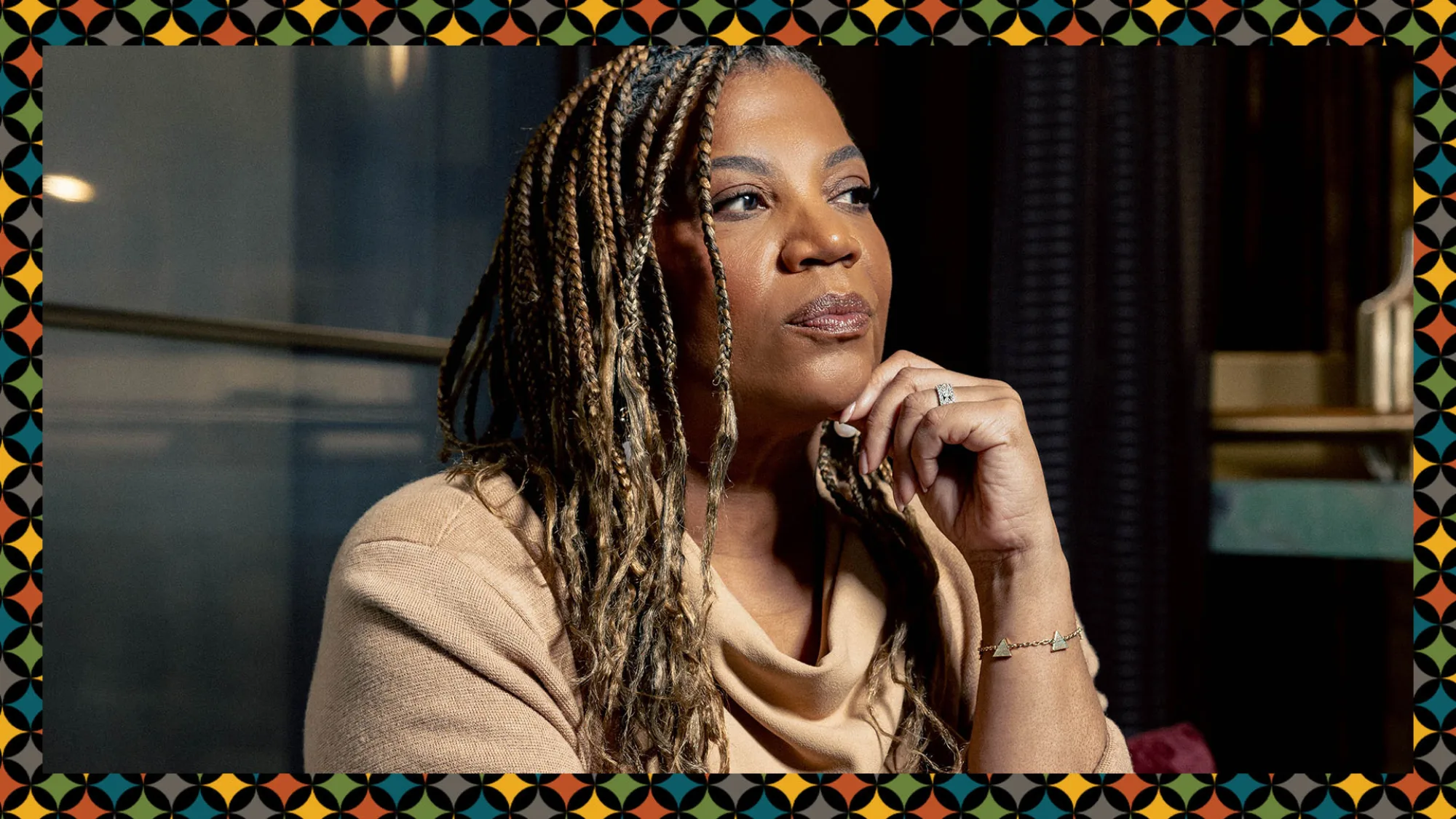
Leading a Community Foundation | How can we amplify our impact? | Building a stronger future together
In this episode of The Power of Possible: Leadership Edition, Dr. Tashion Macon and Chanda Smith Baker take listeners inside what it means to lead a community foundation. Chanda describes a community foundation as the place where generosity meets purpose and legacy, bringing together people who care deeply about their neighbors and want to make a meaningful difference. At its core, the work is relational — connecting donors, nonprofits and communities in ways that turn care into action. Leading this kind of organization requires more than strategy; it demands a commitment to partnership, service and staying grounded in the belief that, despite differences, people ultimately want the same things: stability, opportunity and a better future for the next generation.
As the conversation unfolds, Chanda reflects on the role of leadership in building connections — especially across difference and across generations. She shares how her approach is shaped by listening: to community, to peers and especially to emerging leaders whose perspectives challenge and expand her own. The episode highlights the importance of creating space for new voices, borrowing courage when needed and remembering what it felt like to be earlier in your journey. In doing so, it offers a grounded, hopeful reminder: when leadership is rooted in community and guided by purpose, it has the power to both meet immediate needs and shape a stronger future for everyone.
Watch Now
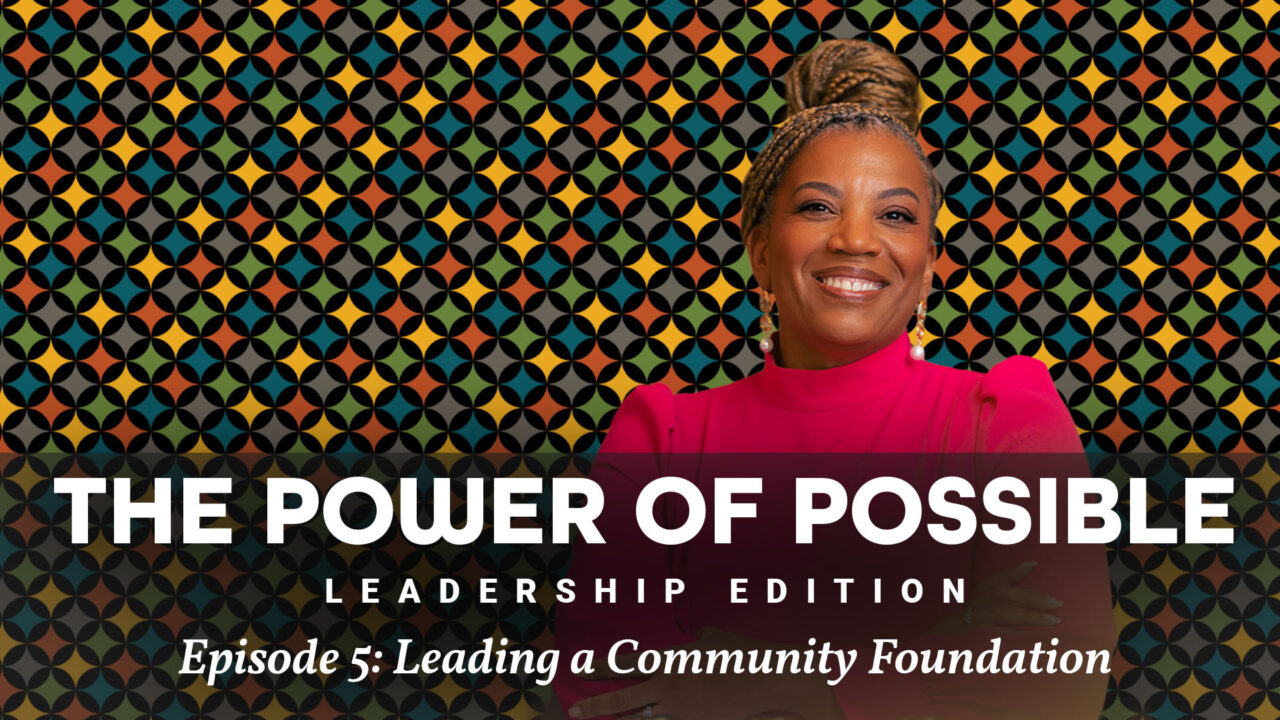
Listen Now
Find The Power of Possible: Leadership Edition wherever you get your podcasts, including Spotify, Apple Podcasts, Amazon Music, and more.
Show Notes
In this episode of the Power of Possible, Dr. Tashion Macon and Chanda Smith Baker take listeners inside what it means to lead a community foundation. Chanda describes a community foundation as the place where generosity meets purpose and legacy, bringing together people who care deeply about their neighbors and want to make a meaningful difference. At its core, the work is relational — connecting donors, nonprofits and communities in ways that turn care into action. Leading this kind of organization requires more than strategy; it demands a commitment to partnership, service and staying grounded in the belief that, despite differences, people ultimately want the same things: stability, opportunity and a better future for the next generation.
As the conversation unfolds, Chanda reflects on the role of leadership in building connections — especially across difference and across generations. She shares how her approach is shaped by listening: to community, to peers and especially to emerging leaders whose perspectives challenge and expand her own. The episode highlights the importance of creating space for new voices, borrowing courage when needed and remembering what it felt like to be earlier in your journey. In doing so, it offers a grounded, hopeful reminder: when leadership is rooted in community and guided by purpose, it has the power to both meet immediate needs and shape a stronger future for everyone.
Quotes
“At its simplest, if you move away all of the politics, if you move away all of the distance, we all do really want the same things.”
“We believe that despite differences, that when people sit across the table, they realize that at a fundamental level people want the same things. They want their families to be well, they want to see their lives progress. They want their children to do better than they did. They want access to quality education and healthcare and food.”
“Sometimes courage needs to be borrowed. Sometimes, you’re like ‘I don’t know.’ and then you say ‘Girl, you got this. We got this.’ and it moves from a solo act to a community act.”
Dr. Tashion Macon (00:00):
Hello everyone. I'm Dr. Tashion Macon.
Chanda Smith Baker (00:03):
And I'm Chanda Smith Baker, the president and CEO of the Saint Paul & Minnesota Foundation.
Dr. Tashion Macon (00:08):
Together we're opening up leadership conversations we've been having for a long time with each other and others because we've witnessed how powerful it is to explore these ideas out loud. And this is The Power of Possible: Leadership Edition.
(00:28):
Sometimes courage needs to be borrowed in order to see what the future holds for you. I've watched Chanda not only grow as a leader, but find ways to embrace both individuals young and old along her journey. That's what it takes to lead a community foundation. The ability to connect community to purpose and compassion to legacy. I'm Dr. Tashion Macon and in this episode we explore what is a community foundation and what it means to lead one of the largest community foundations in the country. Chanda reflects on what's necessary to support community as a whole, especially the next generation of leaders. You're in for a great episode. Trust me.
[NEW_PARAGRAPH]Okay. This episode is about leading at a community foundation. So let's start with a question that I think might interest a lot of people. What exactly is a community foundation?
Chanda Smith Baker (01:26):
Yeah, a community foundation is a place where generosity meets purpose and legacy. One of the major functions that we do is we partner with generous people to manage their donor advised funds. And in the simplest terms, it's managing their charitable checkbook that allows them to make the biggest difference, the biggest impact they can make in community. So we shepherd those funds in relationship with them and then we use dollars, we leverage their support so that we can make investments in community.
Dr. Tashion Macon (02:01):
And so what is so special about the Saint Paul & Minnesota Foundation? What makes it distinguished?
Chanda Smith Baker (02:08):
I mean, we're best in class.
Dr. Tashion Macon (02:09):
Yeah. Okay then. Flex.
Chanda Smith Baker (02:10):
We're best in class. The team is fantastic. They have a long legacy. They were started... The organization was started by people in the East Metro that care deeply about the success and the sustainability and the community thriving. And we continue to bring people into our mix that care about the state of Minnesota. They care about their neighbors. They care about making a difference in doing that in a way that eases some of the administrative burden, allows us to carry the hard parts, if you will, the back office piece so that they can put their actions to good.
Dr. Tashion Macon (02:51):
And so I know that you are a statewide foundation. So how do you serve the entire state of Minnesota in times where we're seeing such deep divide?
Chanda Smith Baker (03:04):
I mean, I think it's important when you know that you have to serve a diverse group of people to have a clear lens in which you live out your values, but to be really clear that one of those values is to be in relationship with people across many differences. And as a matter of that, we have to operate in a way that allows everyone to come into relationship with each other because we believe that despite differences that when people sit across the table and they realize that at a fundamental level, they want the same things. They want their families to be well. They want to be able to see their lives progress. They want their children to do better than they did. They want access to quality education, healthcare, housing, food. At the simplest... If you move away all of the politics, if you move away all of the distance, we all really do want the same things. And so we have to operate that way.
Dr. Tashion Macon (04:08):
I really appreciate that. I think I'm hearing a lot of leaders speaking those terms particularly because we do have to get along. We do have to be in this work together, in this life together. So what are some of the characteristics of a community foundation that might be beneficial to other industries?
Chanda Smith Baker (04:31):
Community foundations, I think that where there's a value is that our work happens through people and we have a partnership and a perspective about that, that it's not over, it's with. And often I think there are industries that commoditize people and in our work we are here to serve them. And I think a service mentality is helpful, particularly in a moment right now where there's so much polarization, automation, customer service is not the same as what it used to be. And in the work that we're in, we're a relationship business. We're in the service industry. And I think that if we keep at the heart that people, relationships are essential to progress, I think we would be doing much better across all sectors.
Dr. Tashion Macon (05:29):
I can appreciate that. I do think that the importance of human capital, human relationships has become less realized in other industries. I do appreciate the service forward and the service first approach that you're sharing here. And from that perspective in your role, I know if you've had an opportunity to come across some great women leaders or female leaders. What has it been like to connect with women leaders, specifically in the world of philanthropy?
Chanda Smith Baker (06:10):
I think in leadership, you step into roles or you step into a situation and you can feel like you're the only one that's traveled that road. And I think what is important is for leadership to be reflective of those that are leading and those that will be leading because there are nuances. We might hit the same problems, but how we approach it, how we filter it, how we see it comes from both the lived experience, professional experience, educational experience. There's a lot of lenses in which we bring. And I think that one of the most essential pieces of leadership is to continue to surround yourself by people that push your leadership forward, people that provide perspective, people that allow you to see themselves or yourself in them. I think that's really important when I think about the work.
(07:06):
I was just at a leadership luncheon and there were women talking about their journeys and each one of them talked about courage. Each one of them talked about, "I stepped into a situation where I was the first, I stepped into a situation where I was unfamiliar. I stepped into a situation that I wasn't sure I was prepared for." And being in a room of a thousand people and hearing people that have moved into position, not just talk about their first step, but a recent step, right? And I think that's really important to say even when someone from all perspectives looks like they've reached sort of the highest pinnacle of a career for them to say, "But I'm still stepping into spaces where I'm the first or the only, where I know that I haven't had to solve this problem, but I know all the other challenges I've had to solve have prepared me for this very moment."
(08:03):
And one of the things that prepares you for those very moments is the network of people that you have around you. You don't have to have it all when you have a network that supports you and that can provide advice and that can provide... Sometimes courage needs to be borrowed.
Dr. Tashion Macon (08:21):
Hello? Right?
Chanda Smith Baker (08:23):
Sometimes it has to be borrowed, right? Sometimes you're like, "I don't know." And then if you say, "Girl, you got this."
Dr. Tashion Macon (08:29):
Right.
Chanda Smith Baker (08:29):
"We got this." It moves from a solo act to a community act and when you are guided by purpose, I think it becomes much easier to take that step knowing that you will land in a way that is right for you.
Dr. Tashion Macon (08:44):
I love how we often talk about that success is this continuing steps, like continuing to step into different spaces and different spaciousness on the journey. One thing I want to bring forward, particularly from a power of possible perspective, is how I've watched you surround yourself with next generation leaders. You have a panoramic kind of council of leaders that's intergenerational. So push in a little bit around the next generation of leaders you see in Minnesota and how they inspire you and how you listen to them, because I've paid attention to how deeply you listen to them as well.
Chanda Smith Baker (09:28):
Yeah. I mean, I'm a listener by style. I think that sometimes we can define who we think is worthy of advising and I just don't embody that. I also don't want to be old out in these streets. You know what I mean? To talk to someone who's 20 or 30 that is trying to understand philanthropy, trying to understand how to give back, that has an idea about a business, that has a perspective. It comes with a lens that hasn't been shaped all the way by all of the experiences. Sometimes leaders that have been through a lot, they got a lot of cautionary tales and I think that the younger folks coming in, they're seeing next level leadership, right?
(10:30):
Their wishes and what they're expressing is what they see missing. They're communicating gaps. They're communicating opportunity. They're communicating a commitment and an engagement the way they communicate, the way they network, the way they see culture is important and necessary for me to be sharp because if our role is to support the diversity that exists in this community, first of all, it includes them, so I need to listen to them. But secondly, it allows me to understand better from different lenses that becomes useful when I'm engaging with someone else.
Dr. Tashion Macon (11:09):
I love that. I think one of the things that when I experience you in the spaces with the next generation leaders is how you will get into a discussion with them. I think often in this work I hear the next generation or millennials or gen this, Gen Y, Gen Z, Gen LMNOP, right? It's this dismissal of them, like, they won't do this, they can't do this, they don't want to do this, or they don't want to do that. But I do think what you're sharing and what I've seen is when they're invited into a discussion that has mutual respect and regard, there is a rapport. They're actually seeking spaciousness to explore what they are thinking and what they think is also possible. We talk a lot about iron sharpens iron. So when they are coming to you, what about the next generation of leaders and possibility inspires you most in your current role?
Chanda Smith Baker (12:16):
So first I think I'll land on two things. One is I was their age and sometimes you move and it becomes troublesome or you forget how you used to see the world, that you were seeing it through a lens that didn't quite max all of the experience. And I remember trying to get access, trying to get to people and feeling like, how will I ever be able to move forward if I just can't see it? So the responsibility that I feel particularly in a sector that is about people is that... and the way in which I'm rooted and guided by community, the idea of separating that out by any demographic or geography doesn't land well for me. So that includes them, that includes someone that lives further away, someone that has different identity than me. I'm a listener. It's important to me.
Dr. Tashion Macon (13:22):
What inspires you? I think from their perspective, when they're speaking to you and when they're talking to you, when you're in conversation with them, what are some of the themes that inspire you from a possibility perspective in the role you're in?
Chanda Smith Baker (13:39):
I mean, they throw stuff on the wall, right? They just throw it out there and sometimes it's wild, right? I want to start this huge business and I want to, I don't know, be a cosmetologist and a doctor, right? And they'll say all three in one sentence and you're like, "Yo, what? What's happening here?" But what is inspiring is that they could do all them if they want to. What's inspiring is that they're still in a place fundamentally where dreams matter.
Dr. Tashion Macon (14:15):
I like it, yeah.
Chanda Smith Baker (14:17):
You stick something way out there and even if you get halfway, at least you went further and I think that their ability to dream, they network differently. They storytell differently, right? They're growing up in a digital era, right? Everything is posted and people see it sometimes negatively and I'm like, look, they are documenting, right? Only if I had documented my journey. I remember the things that stand out, those standout moments, good, bad moments, but there are young people out here that have a documentation of every day. Can you imagine seeing your growth year over year and the way that you see yourself? To me that's inspiring.
Dr. Tashion Macon (15:04):
I love it. I think that's a perfect way to kind of wrap up this episode about leading from a community foundation is there's the doing and there's the dreaming and there's a beautiful way in the space of possibility, particularly the power of possible to do both. And thank you for being rooted in community, reflecting that back and also being close enough to yourself that you remember your younger self so that you invite the next generation of leaders into all that's possible in this state. Thank you.
Let’s Stay Connected
Sign up for the Saint Paul & Minnesota Foundation newsletter to get involved with your community, read stories of nonprofits doing great work, and get tips and tricks on maximizing your impact on your favorite causes.