
The Power of Possible: Leadership Edition
Hope, Joy & Possibility: How do leaders hold a future vision in chaos?
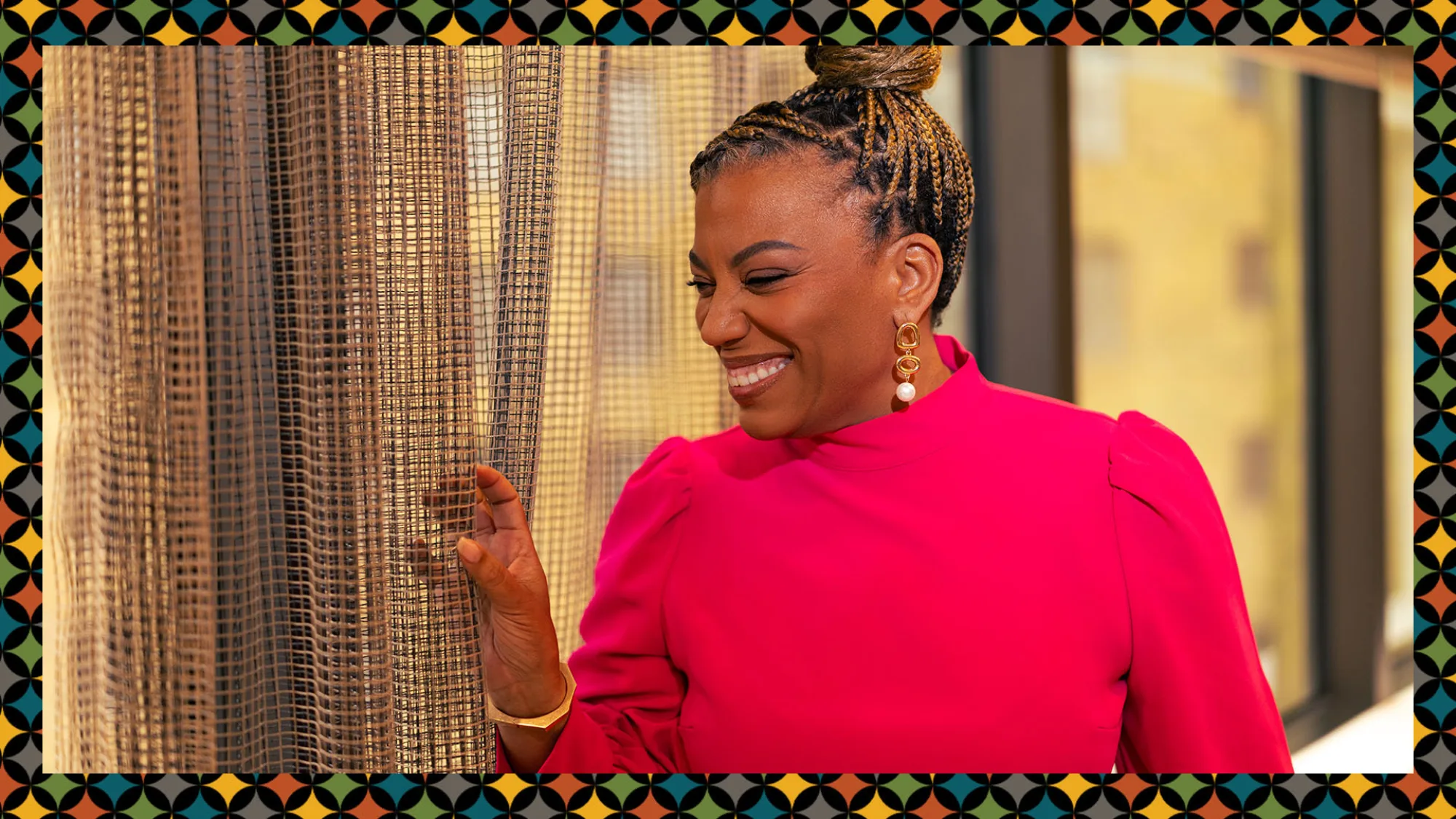
Hope, Joy & Possibility: How do leaders hold a future vision in chaos? | Imagination & joy as resistance
In this episode of The Power of Possible: Leadership Edition, Dr. Tashion Macon and Chanda Smith Baker explore what it means to hold on to hope — and even joy — when the future feels uncertain. Their conversation is grounded in a powerful question: how do leaders stay connected to a larger vision when the present moment feels heavy or chaotic?
The episode also reframes imagination as a critical leadership practice. Chanda describes how she looks for patterns not in numbers, but in conversation, community and across experiences to better understand where solutions might exist. Throughout the conversation, there’s a steady reminder that leadership isn’t about agreement, but commitment — to each other, to the work and to future generations. By staying grounded in that commitment, leaders can create space for hope, sustain their energy over time and continue building toward a future that may not always be visible.
Watch Now
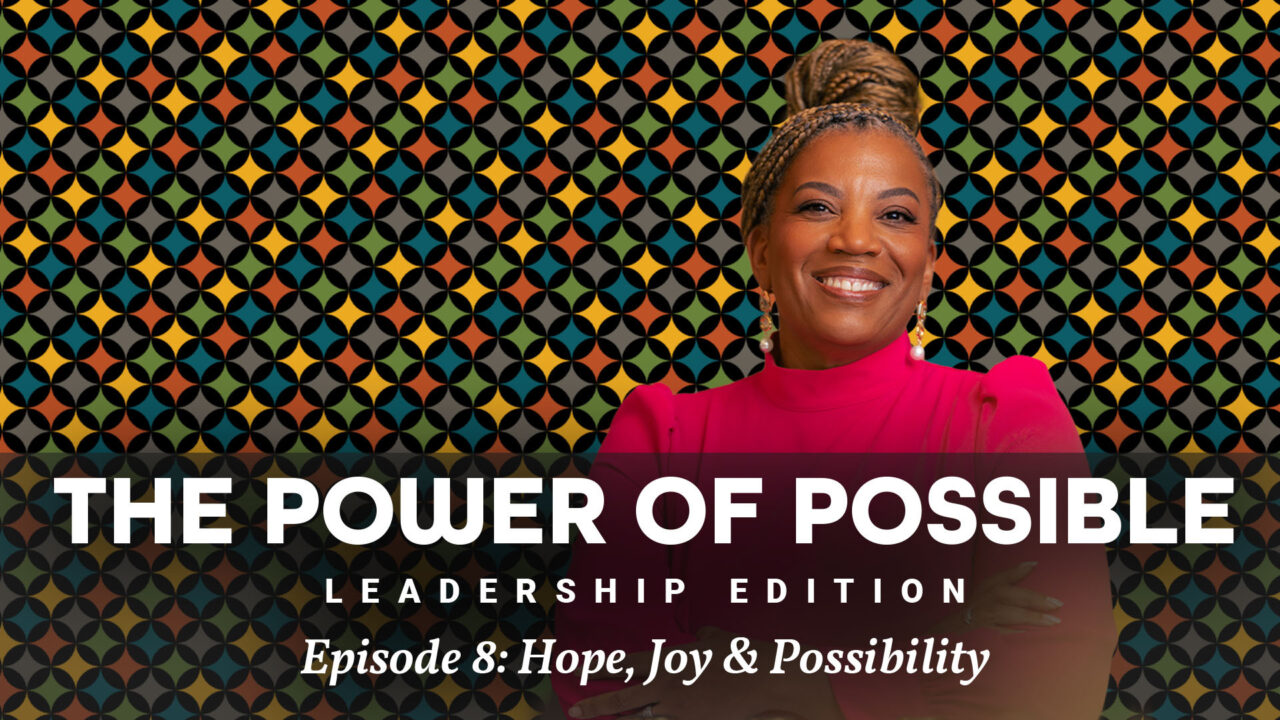
Listen Now
Find The Power of Possible: Leadership Edition wherever you get your podcasts, including Spotify, Apple Podcasts, Amazon Music, and more.
Show Notes
In this episode of The Power of Possible, Dr. Tashion Macon and Chanda Smith Baker explore what it means to hold on to hope — and even joy — when the future feels uncertain. Their conversation is grounded in a powerful question: how do leaders stay connected to a larger vision when the present moment feels heavy or chaotic?
The episode also reframes imagination as a critical leadership practice. Chanda describes how she looks for patterns not in numbers, but in conversation, community and across experiences to better understand where solutions might exist. Throughout the conversation, there’s a steady reminder that leadership isn’t about agreement, but commitment — to each other, to the work and to future generations. By staying grounded in that commitment, leaders can create space for hope, sustain their energy over time and continue building toward a future that may not always be visible.
Quotes
“I live in a space, that...tomorrow’s not promised. And joy comes in the morning.”
“The requirement is not agreement. The requirement is commitment.”
“You can’t create what you don’t believe.”
“What can I believe on behalf of future generations?”
“Some people see patterns in numbers. I see patterns in conversation. I see patterns in community. And I can see solutions.”
Tashion Macon (00:00):
Hello, everyone. I'm Dr. Tashion Macon.
Chanda Smith Baker (00:03):
And I'm Chanda Smith Baker, the president and CEO of the Saint Paul and Minnesota Foundation.
Tashion Macon (00:08):
Together, we're opening up leadership conversations we've been having for a long time with each other and others, because we've witnessed how powerful it is to explore these ideas out loud. And this is the Power of Possible Leadership Edition.
(00:28):
One of the things I've witnessed working with Chanda Smith Baker is that hope isn't something she performs, it's something she practices. Especially when the moment doesn't call for it, especially when it's hard.
(00:43):
I'm Dr. Tashion Macon, and on this episode of the Power of Possible, we go somewhere honest. Chanda talks about holding joy as a conscious act of resistance and fuel, not simply a feeling you wait on, but a discipline you build. We talk about grief, we talk about exhaustion, and we talk about why imagination isn't optional when you're leading through turbulence. If you've ever had to find the light when the room is dark, this one is for you.
(01:23):
I think one of the questions that rises up for me is in this current culture where difference is demonized, what can you offer around... Because I heard you also say their leadership energy lives in your body. In this time when we're dealing with a lot of difference and not knowing how to embrace difference, how does hope and joy show up as resistance for you?
Chanda Smith Baker (01:57):
Hope and joy show up as resistance, but it also shows up as fuel. I live in a space that tomorrow's not promised and joy comes in the morning.
Tashion Macon (02:14):
Right.
Chanda Smith Baker (02:15):
Right? Both of those things are true, and that's a whole different part dimension of my life, right? Which is grounded in faith and experience and understanding that dark days come, but they don't last always. There is just a fundamental belief that, again, we have what we need to make the situation better. Because of the examples that sat before me, it was not a requirement for you to sit with me or be in community with me, or to be in the work. The requirement is not agreement. The requirement is commitment.
Tashion Macon (02:50):
I like it.
Chanda Smith Baker (02:50):
And that's very different for me. I don't actually find it that uncomfortable to be with people that I disagree with. I feel comfortable where I disagree. I don't always have to say it, but I'm also very curious. And I don't know how we get to a better place standing on opposite sides. Which means, I want to understand your perspective, I want to understand what's important to you. And if there's something I can offer, given you don't reduce my humanity, that's the line.
Tashion Macon (03:21):
Yes. Right.
Chanda Smith Baker (03:21):
Disagreement is not the line. The reduction of my own humanity is a line. And if that happens, go be great.
Tashion Macon (03:27):
Right, right. I want you to unpack for me the requirement is commitment, the requirement is not agreement. I think that is really profound, particularly when it comes to discourse. Whether you're in community or you're in the corporate square, or you're in civic engagement. Unpack that a little bit.
Chanda Smith Baker (03:48):
Well, if we have a disagreement but you're committed to sitting at the table until we find a place of agreement, I can do that.
Tashion Macon (03:56):
As the CEO of the community foundation, how do you hold hope on behalf of the community when others can't? I've heard you often say that we have the power to create the conditions of success, and for people to thrive. How do you create those conditions in what feels like chaos? How do you continue to imagine, reimagine, and create those conditions?
Chanda Smith Baker (04:26):
Well, you can't create what you don't believe.
Tashion Macon (04:29):
And power. Yeah. Agree.
Chanda Smith Baker (04:33):
If I had to connect all of the things that we've talked about, there's faith, there's an understanding of history. All of us have arrived here on this land, aside from our native relatives, with an experience of someone who had to come through something. And these times are complex and difficult. And so, part of my practice is to remind myself of times that were more challenging.
Tashion Macon (05:04):
Reflecting.
Chanda Smith Baker (05:05):
Reflecting. Understanding the history. Understanding that while they were in it, they probably didn't see us today, but they believed it.
Tashion Macon (05:18):
They believed. Yeah.
Chanda Smith Baker (05:19):
They believed it. And so, what can I believe on behalf of future generations? I hold that and I take that responsibility seriously. And then if I believe it, then how do I inspire it? How do I set the tone of it? It's an orientation. It is a choice. It's just a choice that requires a commitment to the choice. Because there are days that feel really, really hard, and I can choose how I want to experience it. And I do.
Tashion Macon (06:01):
I have a great appreciation for how you contextualize the truth of a situation. You don't run away from the truth of it, you contextualize it and you're transparent with how it's landing in your head and your heart and your hands. And then you're able to get to the gift you want to give in community from this through line. And I love how you say you have to... It's like you have to believe it to be it. Even though things may be chaotic, you still choose to believe. You reflect historically on your ancestral history, all the ethnic histories in this wonderful nation, immigration, immigrants and things of that nature. And then you also reflect on your family history. And some kind of way you thread that to believe in a better future. Is that what you're showing up for?
Chanda Smith Baker (07:05):
I feel like I'm showing up in that. I feel like there's more of a knowing of the complexity of emotions. That we're complex. And that I remember writing something to the team and saying almost like it's okay to smile and not feel guilty.
Tashion Macon (07:27):
It's okay to smile and not feel guilty.
Chanda Smith Baker (07:30):
I think that the way we can be right now is times are tough and you have to demonstrate how tough they are. People come, "How are you? I know it's been hard." And I'm like, "Well, hell, I wasn't thinking about hard. I was thinking about lunch." You know what I mean? I was thinking about how great it is to see you right now. I cannot center... Tashion, honestly, I don't know if it is always been from the healthiest place, right? Avoidance is not a long-term strategy, but there is a reality that the things that you are going through don't always need to be front and center. If it's personal. My cousin was murdered. I have a job to do. I am sad. People do know it, but I can't bring it up in every conversation because it will stop progress. It will stop me from moving through the grief process. It will stop me from... So, what do I need to do? What did I do with that is I launched Art is My Weapon. How do I take a situation that came from gun violence to say I can create something.
Tashion Macon (08:44):
You can make something better.
Chanda Smith Baker (08:45):
I can make something better, and creativity is a place that my grief can go. And so, if mine can go there, someone else's can go there.
Tashion Macon (08:52):
Right. Right.
Chanda Smith Baker (08:53):
And if I can raise awareness on this issue without it being politicized, why wouldn't I do it? And so, my emotions and complexity moves into solutions.
Tashion Macon (09:06):
As you talk about your practice, your practice of reflection, I think it is almost common that in very hard times people tabernacle around trauma, or they'll worship a wound. Right? It's almost like phantom pain. They don't really know what to do if they're not in pain. Something should feel a certain way and it's not feeling that way. Something's now missing that used to be there. I think your approach to... I don't know what the word is, but I don't know that it's avoidance as much as it is, I'm aware of it.
Chanda Smith Baker (09:56):
I'm aware of it. I'm completely aware of it. And I know that for some people they are seeing the world differently, and that's painful.
Tashion Macon (10:07):
Right.
Chanda Smith Baker (10:08):
I think for some people what they want to make sure that people understand is that they see the pain that other people are experiencing.
Tashion Macon (10:16):
Okay. To be witnessed.
Chanda Smith Baker (10:18):
They're witnessing something that is troubling, and it is a new experience. They're seeing the injustice, and they're not conditioned to seeing it. I'm conditioned to seeing it.
Tashion Macon (10:40):
That's the distinction. Yeah.
Chanda Smith Baker (10:43):
I'm conditioned in my body over generations. I'm conditioned because of the work that I'm in. We were working on driver's license and immigration years ago, because it's a vulnerable time and people were hiding that had mixed status. People have been hiding. There's an intensity. There is a number of things that are occurring right now. But I think because I work in community, I have seen disasters show up in my life, in others' lives, and in ways that if I'm looking, I'm always seeing where pain is. I'm always seeing where a system didn't act right. I'm always seeing where a leader created conditions that were unavoidable, or creating conditions that have limited someone's opportunity. That's what I do. That's what I see. That's what I'm [inaudible 00:11:47] seeking. My balance is different because that is the work.
Tashion Macon (11:54):
But I get it by something you just said. You said, "I've always been working in community." I think sometimes the sector has been working on community. And maybe that's why you're able to believe for a better future. That's why you're able to continue to reimagine, because you're in proximity to hopefulness that is demonstrated in children's bodies, or the little girl walking to school who still believes that education is her way up out through and over. Or you may hear stories of parents not participating in their child's education, but you see mothers walking to pick their kids up from school. You know what I'm saying? I think that this question has crystallized for me in your answer around... Yeah, I don't think it's avoidance.
Chanda Smith Baker (12:54):
Yeah. It's funny that you even bring up the school, because I had a mother that was talking to me yesterday about her daughter.
Tashion Macon (13:01):
Wow.
Chanda Smith Baker (13:01):
And her daughter wasn't doing her homework, or whatever. And she's like, "The teacher called and I got to go deal with this." And I'm like, "Well, before you go deal with it, did you listen to her? Did you listen to her?" There are conditions that bring the best out.
Tashion Macon (13:20):
That's good.
Chanda Smith Baker (13:23):
And then there's conditions that don't. Something isn't sitting with her. And when things are not working, I don't see that differently than the work we do. What isn't working right? Why aren't we getting the best out of this situation? What do we need to understand? What do we need to listen for? What do we need to ask?
Tashion Macon (13:46):
That sums it up. What do we need to ask when the conditions are not favorable and they're not moving in the direction of our hope? Can we pause and say, "Why? What is happening? Can we deeply listen?" I do think listening is one of the most understated powers, superpowers of leadership. And I have heard you speak about listening so many times. And I do think that it's a superpower of your leadership.
Chanda Smith Baker (14:17):
I think it's listening and I think it's observation. I think that if you look at, I don't know, Steve Jobs or IDEO, or any of those, right? If you ask someone what's not working well, they're going to tell you something from their head. But if you watch what they're experiencing, you can observe it. You can observe where those barriers are differently. You have to listen to what's being said and what's not being said. That is something that I see of great value. And I can get some, I can glean some knowledge from a book. But I deepen my understanding. I can contextualize it more. I can see where the variations are and the gaps are and the opportunities are when I listen to the human experience.
(15:05):
And I think it's a privilege to be in the role to be able to listen. To be able to listen. Some people see patterns in numbers, I see patterns in conversation. I see patterns in community. And I can see solutions. And then we act on them in community because we don't hold it alone, we hold it in relationship with others.
Tashion Macon (15:33):
And that is the power of re-imagination in a time of absolute chaos. Thank you for sharing that creativity. Thank you so much.
Let’s Stay Connected
Sign up for the Saint Paul & Minnesota Foundation newsletter to get involved with your community, read stories of nonprofits doing great work, and get tips and tricks on maximizing your impact on your favorite causes.