
The Power of Possible: Leadership Edition
Being the First
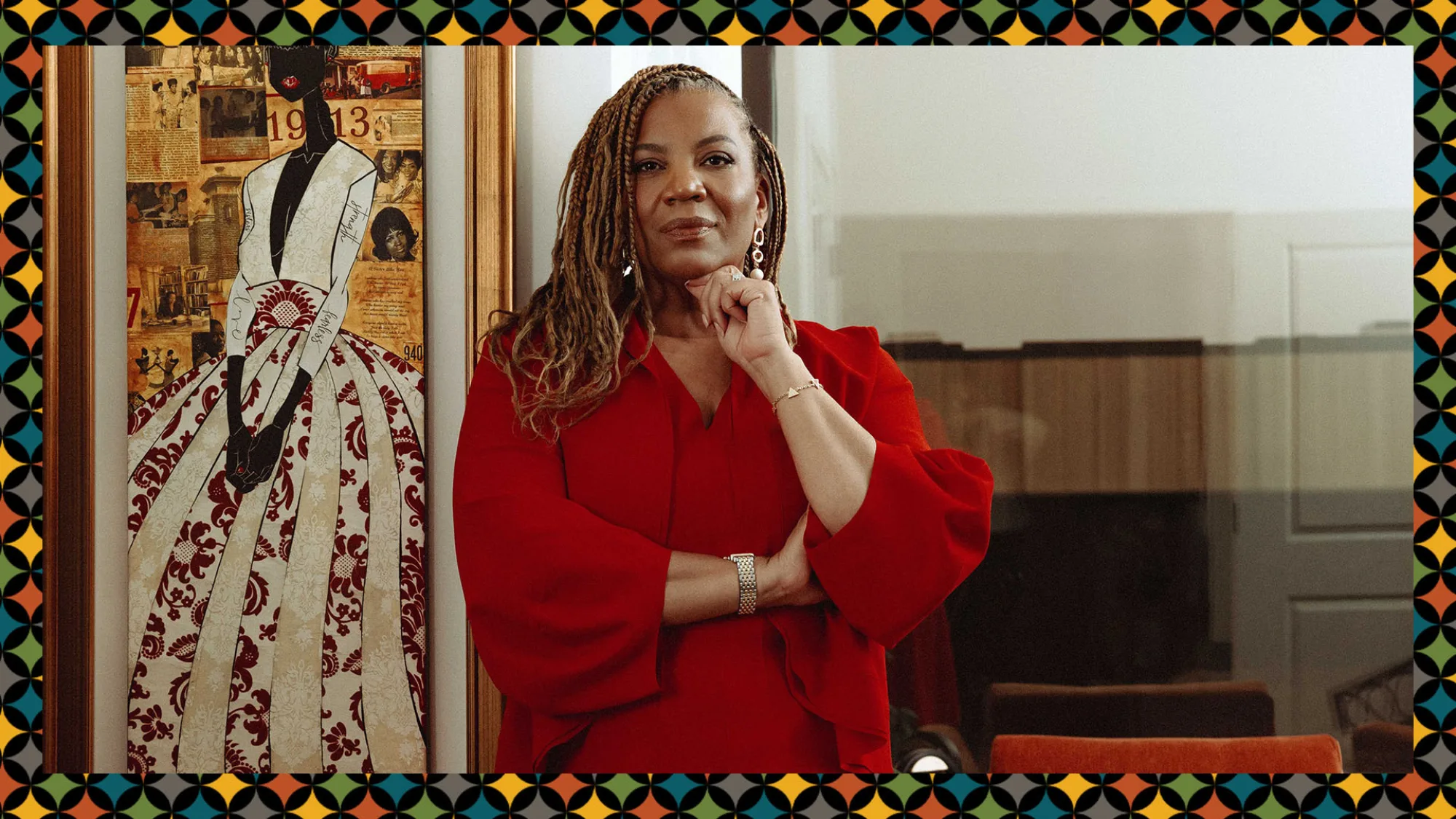
Being the First: How does identity shape the way we lead? | Creating legacy
In this episode of the The Power of Possible: Leadership Edition, Dr. Tashion Macon and Chanda Smith Baker explore the often unspoken weight and responsibility of legacy in leadership. This is a conversation about what it means to lead as your full self in spaces that weren’t necessarily built with you in mind. As the first Black CEO at the Foundation, Chanda reflects on what being “the first,” carries: not just visibility, but expectation, complexity and a deep responsibility to open doors wider for those coming next. At the same time, she reframes leadership in a powerful way — moving away from having all the answers, and toward being grounded in community, where answers already exist if you’re willing to listen.
Chanda shares the daily practices that make leadership sustainable, including music, stillness, reflection, sisterhood and staying connected to herself beyond her role. She speaks openly about identity, representation and the reality of navigating race, class and gender in leadership spaces. For Chanda, leadership isn’t about perfection or control, rather it’s about staying present, staying grounded and continuing to evolve. Legacy, in this sense, isn’t just what you leave behind; it’s how you show up, every day, in the work and with the people around you.
Watch Now
Listen Now
Find The Power of Possible: Leadership Edition wherever you get your podcasts, including Spotify, Apple Podcasts, Amazon Music, and more.
Show Notes
In this episode of the Power of Possible, Dr. Tashion Macon and Chanda Smith Baker explore the often unspoken weight and responsibility of legacy in leadership. This is a conversation about what it means to lead as your full self in spaces that weren’t necessarily built with you in mind. As the first Black CEO at the Foundation, Chanda reflects on what being “the first,” carries: not just visibility, but expectation, complexity and a deep responsibility to open doors wider for those coming next. At the same time, she reframes leadership in a powerful way — moving away from having all the answers, and toward being grounded in community, where answers already exist if you’re willing to listen.
Chanda shares the daily practices that make leadership sustainable, including music, stillness, reflection, sisterhood and staying connected to herself beyond her role. She speaks openly about identity, representation and the reality of navigating race, class and gender in leadership spaces. For Chanda, leadership isn’t about perfection or control, rather it’s about staying present, staying grounded and continuing to evolve. Legacy, in this sense, isn’t just what you leave behind; it’s how you show up, every day, in the work and with the people around you.
Quotes
“There’s a whole lot I don’t know. And that’s alright. Because I don’t need to know it all. I need to be in community where the answers sit.”
References
“The 33 Strategies of War” by Robert Greene
Dr. Tashion Macon (00:00):
Hello everyone. I'm Dr. Tashion Macon.
Chanda Smith Baker (00:03):
And I'm Chanda Smith Baker, the president and CEO of the Saint Paul & Minnesota Foundation.
Dr. Tashion Macon (00:08):
Together we're opening up leadership conversations we've been having for a long time, with each other and others, because we've witnessed how powerful it is to explore these ideas out loud. And this is The Power of Possible, Leadership Edition.
(00:28):
I've had the honor and the privilege to be Chanda's coach. I've had a front row seat to watching her carry something most leaders never name, the weight and the gift of legacy. It lives in her body, it shapes every decision, and in this conversation she unpacks it out loud. I'm Dr. Tashion Macon. In this episode we talk about what it means to lead as your full self in spaces that weren't necessarily built with you in mind, identity, visibility, and the quiet daily practices that sustain you when the spotlight is both a gift and a burden. Chanda doesn't just talk about legacy. She demonstrates it. Listen in to this episode as she shares the secret sauce of the spotlight.
(01:23):
What I appreciate when we ask this question, of course, is the levity. Like, leadership, it can be heavy. And so it has to be infused with some levity. So I just wanted to...
Chanda Smith Baker (01:36):
Well, I think the point here is that, and I think what I appreciate about these conversations, getting asked questions, is that it presents an opportunity for me to get to my own balcony on my leadership. To be able to say, "What are the practices? What do I do?" I wake up the same way. I wake up, I grab my phone. I am not looking for emails, I'm about to play my music. I ground in music. I ground in music that sets my day and my intention. I read something. I usually read whatever word comes to mind the first thing when I wake up. I find something that centers me on that word. Why did I think of "joy" when I woke up? Why did I think of "vulnerability"? Why did I think of this person? I ground on those things before I get up.
(02:27):
At the end of the day, it's quiet. I have a bath routine. I'm in the bath. I'm being still. I'm thinking. I have people that will call me and say, "Have you taken your bath yet?" Because once I've taken it, I'm not talking about work no more. It's over. I have a practice of routine. I have a practice of being in sisterhood. I have a practice of being engaged with my family. I have a practice of identifying me as a whole person that has other things that I'm responsible to and for for myself that I act into as a way of sustaining my leadership. It just can't be all work. And sometimes the work is being with community that provides a reflection or doesn't see me by a role. Or on those hard days, I've called you and you're like, "Yeah, okay, buttercup. The day was hard and so tomorrow comes. And so it might be tomorrow, hard might be tomorrow too. What you going to do about it?"
Dr. Tashion Macon (03:35):
And how are we going to be in it, right? I think I really love your response here and the authenticity of it, like your person and your practice and your professionalism, you don't live these segregated existences. You show up in your whole self and you invite your team and others in sisterhood to show up in their whole selves. How does that legacy shape the way you lead? And I'm specifically speaking about the fact you're being the first Black woman to lead the Foundation. Congratulations. And how did that reality shape the way you entered the role and how you enter rooms?
Chanda Smith Baker (04:24):
Being the first is a thing. It's like, how can a group of people be in a country for 400 plus years...
Dr. Tashion Macon (04:32):
Speak on it.
Chanda Smith Baker (04:33):
... and be the first.
Dr. Tashion Macon (04:34):
Right.
Chanda Smith Baker (04:36):
The first is glass breaking. It's either glass breaking or you're on a glass cliff.
Dr. Tashion Macon (04:44):
That's very true.
Chanda Smith Baker (04:46):
You're either at the top getting ready to fall off or you broke the glass, but either case, because we know people that have been in either case, in either case, you have a responsibility to open up more room. Representation matters. We always have known that. Many people have always known that. It opens up the possibility, even me being at the dining room table with my uncle opened up the possibility of a role that I didn't know anything about at 12. But it wasn't just the role, because I didn't fully comprehend it, it was that I knew he was helping people and I knew that you could do good by helping people and that I admired and respected him. And so that course had me never think about not being in the social sector because of those early examples. And he was the first. I named him as the first.
(05:33):
So there is pride in the legacy that you heard when you asked me that question and then there's a recognition of what he had to navigate to be unlike anyone else who's been in that space, which means people don't know always how to interact with you. And you may encounter things that other people have not had to encounter. Let me scratch the word "may". You will...
Dr. Tashion Macon (05:58):
You will.
Chanda Smith Baker (05:59):
... encounter things that other people don't have to encounter. I don't think you go into a situation knowing you're going to be the first without knowing that you're going to have some different opportunities.
Dr. Tashion Macon (06:14):
And possibilities.
Chanda Smith Baker (06:15):
And possibilities. Right. It sits on both things. Both things are true, that by being in the seat, more people are looking at the organization simply that hadn't because they didn't see it as a place for them. And the opposite could also be true. And so how do I account for both? So my accounting, my math equation of leadership has to include more.
Dr. Tashion Macon (06:45):
Right. I think what strikes me every time I'm in conversations with women leaders like yourself, particularly women of color leaders, and sometimes women who are just the first, is that the word is set up as this beautiful distinction. And there's also this myth that it's also difference. First, it's this word of like beautiful distinction, but there's also like this difference. And you hear this historical language, like sometimes it'll be, "The first person in 25 years, the first person in 50 years, the first person in 10 years," and that always strikes me because I'm wondering, when you're the first from a beautiful place of distinction, but there's this difference gap that is that massive, like you have children that's 25. You see what I'm saying? Like you may have grandchildren that are 10. How does that settle on you when you're really trying to engage people where this difference seems like a chasm that they can't cross or there are differences that show up? Are these chasms we can cross?
Chanda Smith Baker (08:11):
Leadership is hard, period.
Dr. Tashion Macon (08:15):
Okay.
Chanda Smith Baker (08:16):
I believe that most leaders go in and feel distinctive in some way, period. I think that we are in a place, we are watching it play out on the national and global stage, we have played this out on the global stage in this state multiple times over the last 6 years. We are exercising our own collective muscle around race, class, and gender. It is undergirding almost everything. And at this point, if there's not a deeper understanding of the complexities of navigating in different cultural communities, racial communities, and class, then we're just not paying attention. And do those things go away when you become a leader? Like positionally does the "isms" go away? No.
Dr. Tashion Macon (09:21):
No.
Chanda Smith Baker (09:24):
What I think happens, though, is that your ability to navigate them, or my ability to navigate them without publicly being frustrated, my ability to recognize it as, "It's just because they haven't been exposed. It's not personal. They haven't had exposure. That's why I'm here. This is why I'm on assignment." And I can't center being the first and yet the first in communities that have wanted access is something to celebrate. And so I think knowing when to talk about that and how to talk about that is just as important as being that.
Dr. Tashion Macon (10:07):
Agree. Absolutely agree. And so my final question is what do you appreciate about this time in your leadership journey and what would you potentially like to actualize about your leadership journey?
Chanda Smith Baker (10:32):
I feel confident. There's a whole lot I don't know, and that's all right because I don't need to know it all. I need to be in community where the answers sit. I think that the evolution from being a younger leader that feels like you sort of have to be away, dress away, say things a certain way, look away, I think I feel that less and I feel more responsible towards continuing to evolve myself as a leader, staying in a stance of curiosity and listening and accessibility to feedback, to act on what I think my main role is, which is to support the conditions for people, organizations, and communities to do their best. I see that as very much my assignment and I have the opportunity to do that now, and so I feel grounded in that. Where there are new complexities set new opportunity and I get inspired by that and I'm actually really inspired by Minnesotans right now.
Dr. Tashion Macon (11:52):
There's some words that are really resonating for me as I deeply listen, like "curiosity". Even how the word complexity rolls off your tongue. It's not really a heavy word.
Chanda Smith Baker (12:10):
It is. It is. So there's another book, and I think it's this book, but there's a book that I like. It's called "The 33 Strategies of War". And basically what I remember taking away from it is that we are somewhat raised that if you follow the rules, things will go your way. Like, do unto others. Like, all these things that we're taught...
Dr. Tashion Macon (12:40):
All the things.
Chanda Smith Baker (12:41):
... those aren't real. You can be nice to people and they can be mean to you. You can play by the rules and get overlooked. There are a lot of things. And so, basically, in the book it is coming into an understanding that you will have people that will undermine you. You will have people that will disagree with you. You will have people that won't like you. There is just a number of things that just are.
Dr. Tashion Macon (13:03):
And to embrace that.
Chanda Smith Baker (13:04):
And to embrace it. And I think that once I stopped feeling like I had to own everything and if it didn't work, it was because of something I did or didn't do, I think it created, it opened it up, it doesn't mean that I don't do my best. But there's just a recognition that sometimes you're just sitting in things that don't work and it just is and it's part of the process and it's a reality of leadership.
Dr. Tashion Macon (13:28):
Right. And it's a reality of leadership
Chanda Smith Baker (13:31):
It's a reality of leadership.
Dr. Tashion Macon (13:32):
And life. I want to thank you for this conversation. I have enjoyed it immensely. I think that, for me, it's always such a beautiful joy in this journey of sisterhood and in this journey of getting the privilege and the honor to work with you. I discover something more profound about you every time we have time to connect in deeper ways. And so my highest hope for those who are watching this is that they are inspired and they are ignited and that they see themselves impossibility because I do fundamentally believe you personify it in ways that the world is yet to behold.
Chanda Smith Baker (14:18):
Thank you.
Dr. Tashion Macon (14:18):
You're most welcome.
Let’s Stay Connected
Sign up for the Saint Paul & Minnesota Foundation newsletter to get involved with your community, read stories of nonprofits doing great work, and get tips and tricks on maximizing your impact on your favorite causes.